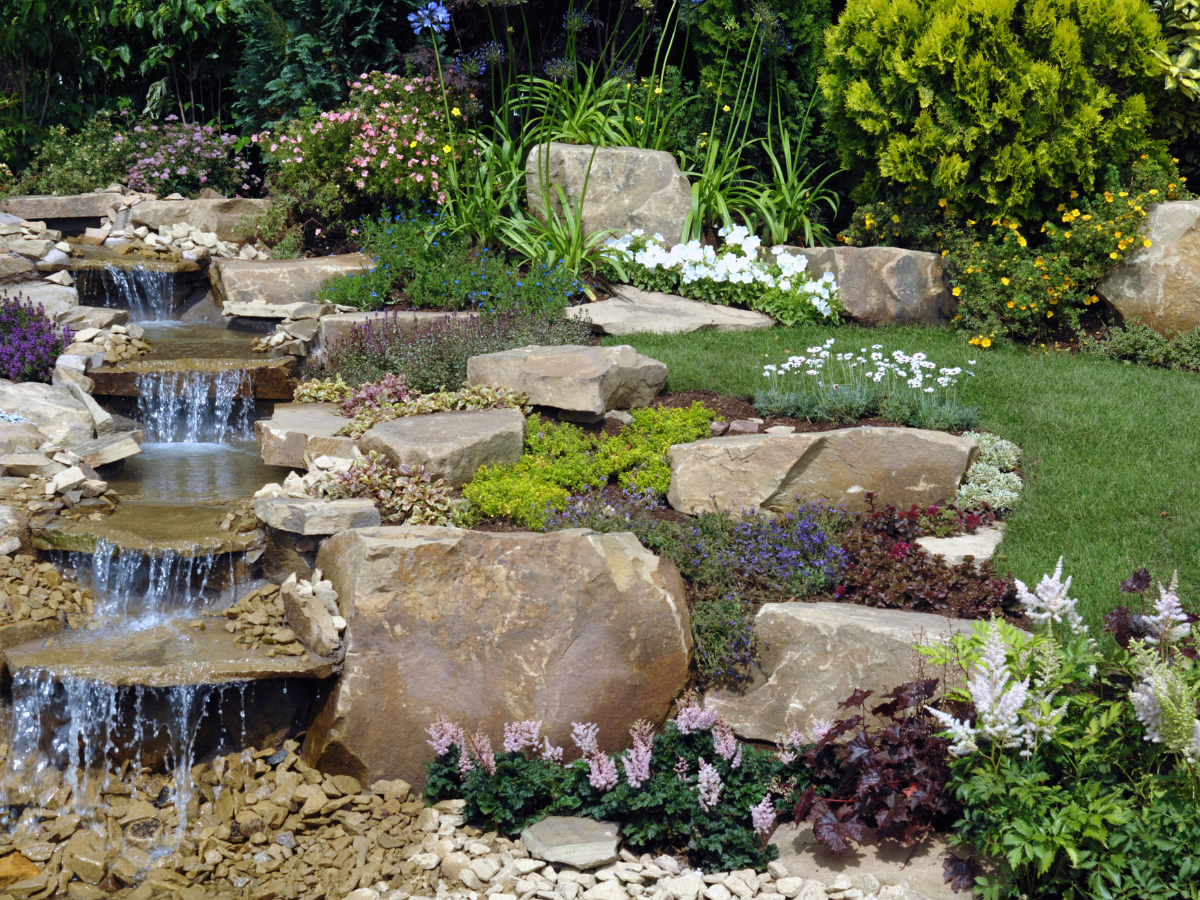
The gentle movement of water can change how an outdoor space feels before you alter anything else. A quiet trickle beside a patio, reflections across a small pond, or the steady sound of a fountain can soften surrounding noise and give the landscape a calmer focal point.
When exploring water features Atlanta homeowners have options for nearly every yard size and design style, from compact bubbling fountains and pondless waterfalls to garden ponds and larger custom installations.
The right choice depends on available space, maintenance preferences, existing landscaping, and how prominently you want water to shape the setting.
With thoughtful placement and design, a water feature can feel like a natural extension of the landscape rather than an added decoration, creating an outdoor area that invites you to slow down, linger, and enjoy the space.
Water Features Atlanta Landscaping Ideas for Peaceful Outdoor Spaces
Why Add a Water Feature to Your Yard?
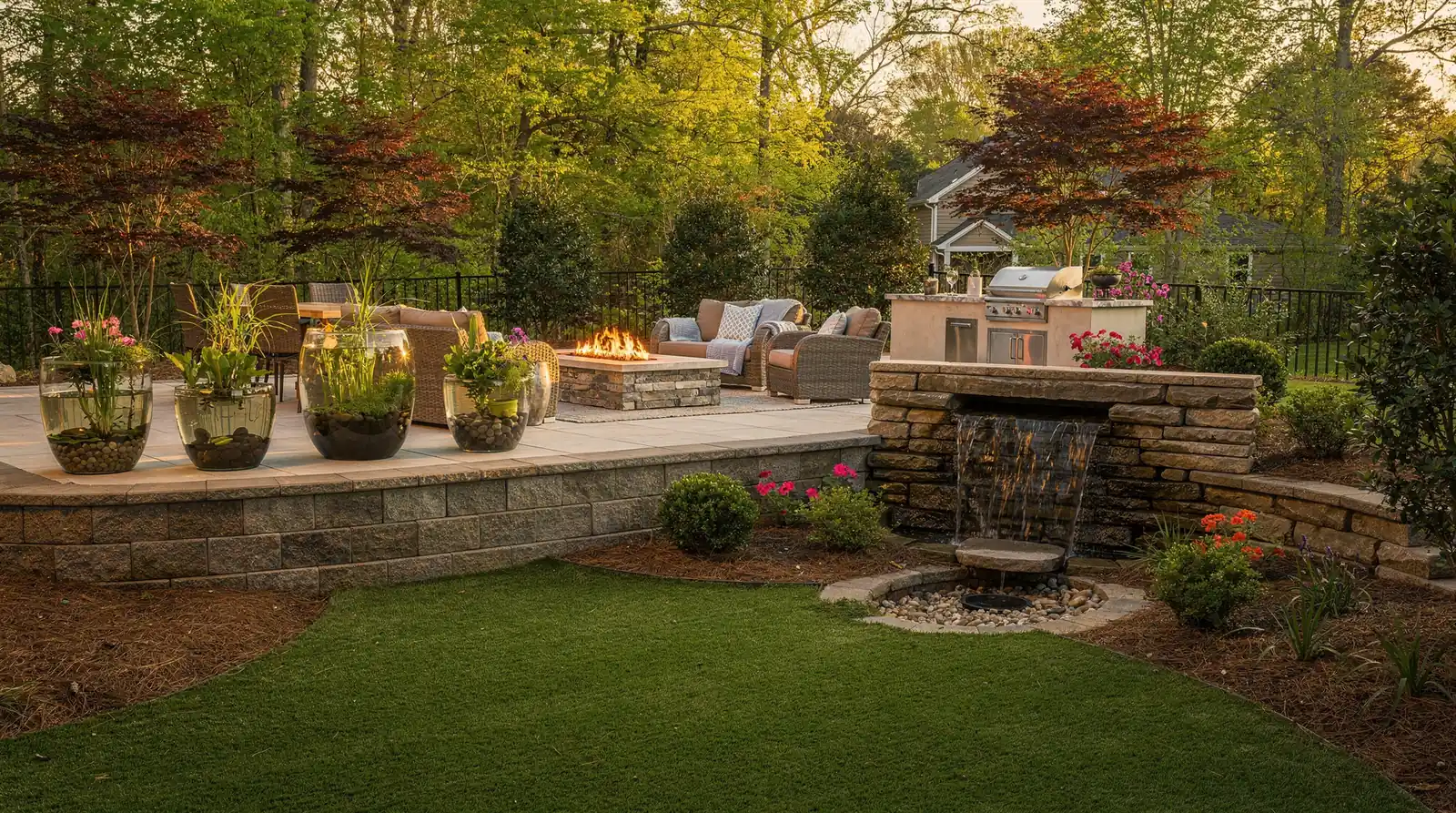
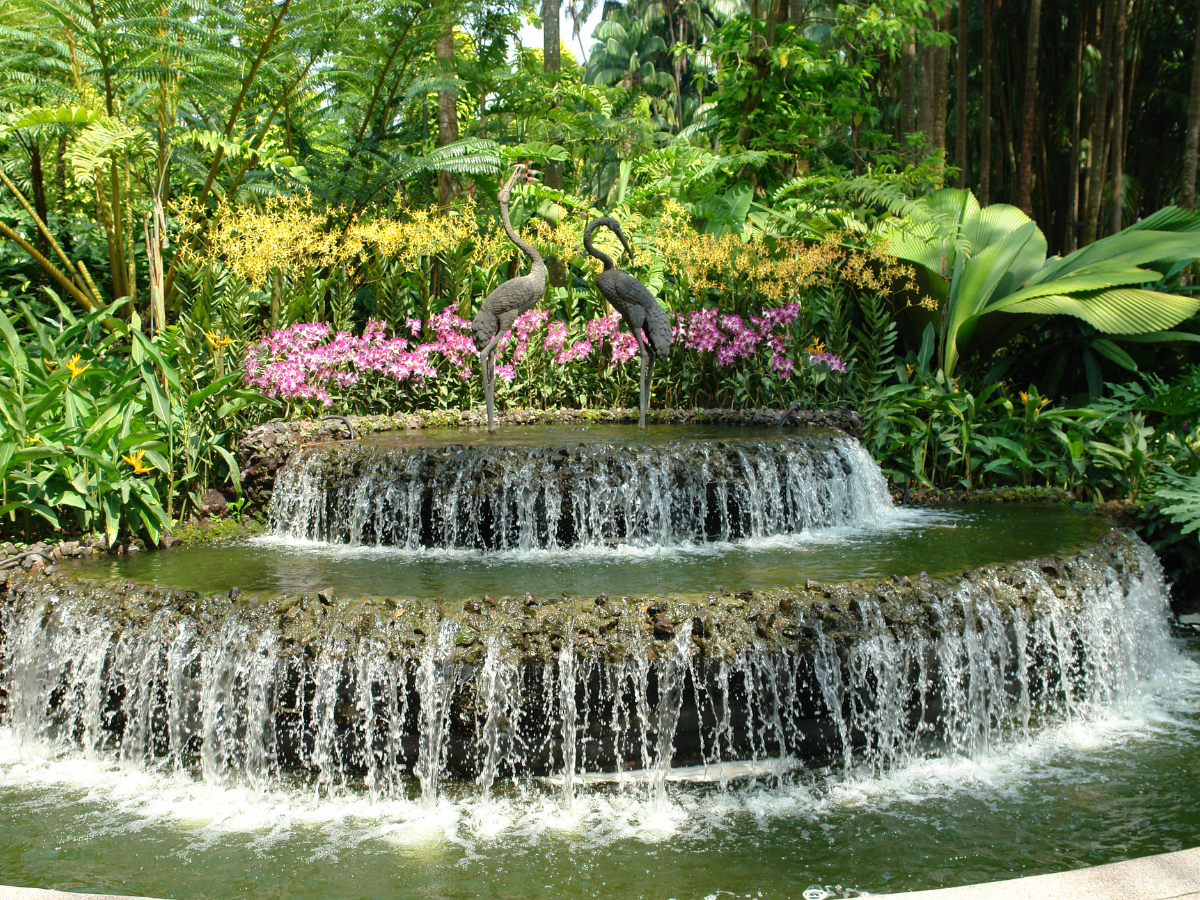
A well-designed water feature can change how a backyard feels without requiring a complete landscape renovation. Movement, sound, and reflection give the yard a stronger focal point and can make patios, seating areas, and garden beds feel more connected.
For homeowners researching water features Atlanta properties can accommodate, the biggest advantage is flexibility. A compact fountain may fit beside a patio, while a larger yard can support a pond, stream, or waterfall.
The right choice depends less on following a trend and more on the available space, terrain, desired sound level, and amount of maintenance the homeowner is willing to handle.
Use Moving Water to Create a Stronger Outdoor Focal Point
Static landscaping relies on plants, texture, color, and hardscape. Water adds movement, which naturally draws attention and can make an otherwise quiet part of the yard feel intentional.
Placement matters. A fountain hidden behind shrubs will have much less impact than one positioned where it can be seen from a patio, kitchen window, or main seating area.
The same principle applies to ponds and waterfalls. A feature should connect visually with the rest of the landscape design rather than feeling like a separate object dropped into the yard.
Sound is another important consideration. Flowing water can help soften nearby traffic, conversations, or other neighborhood noise, but louder is not always better. A gentle fountain may suit a small courtyard, while a larger cascade may make more sense in a spacious backyard where the sound has farther to travel.
Does a Water Feature Increase Home Value?
A water feature can improve the appearance and perceived quality of an outdoor space, but it should not be treated as a guaranteed way to increase resale value.
Buyer preferences vary. Some people may see a well-maintained fountain or pond as an attractive feature, while others may focus on upkeep, safety, or operating costs.
The quality of the installation, condition of the surrounding landscape, and how naturally the feature fits the property are likely to matter more than simply having water in the yard.
For most homeowners, the stronger reason to add one is enjoyment. A water feature that makes a patio, garden, or seating area more inviting can improve how the property is used even if its eventual resale contribution is difficult to quantify.
Which Water Feature Works Best for a Small Yard?
Smaller yards usually benefit from features that provide sound and movement without dominating the available space. A freestanding or wall-mounted fountain can work near a patio, walkway, or courtyard. Water bowls and compact recirculating features provide a similar effect with a relatively small footprint.
Pondless waterfalls are another option. Water flows over rock or another surface before disappearing into an underground reservoir and recirculating through the system. Because there is no open pond, the feature can fit into spaces where a larger body of water would feel out of proportion.
Homeowners integrating a feature into an existing patio or entertainment area should consider the entire outdoor living space rather than choosing the water element in isolation. Seating, pathways, views, lighting, and circulation all affect whether the feature feels like part of the yard.
When Does a Pond Make More Sense?
A pond requires more space and usually more ongoing care, but it offers possibilities that a fountain cannot. Aquatic plants, fish, natural stone, and surrounding plantings can create a more garden-like environment and make the water itself a major landscape feature.
Before installing one, consider sunlight, leaf drop, drainage, filtration, pump access, and how close the pond will sit to trees and structures. A pond placed in a low area simply because water already collects there can create additional drainage problems if the site has not been properly evaluated.
Families with young children or pets should also think carefully about depth, edges, access, and supervision when incorporating open water into the landscape.
Are Waterfalls and Streams Good for Sloped Yards?
They can be. Existing elevation changes can sometimes help create a natural-looking cascade or stream, but the slope still needs to be designed carefully.
Water must remain within the intended system rather than washing soil away, saturating nearby planting areas, or moving toward the foundation. Pump sizing, reservoir capacity, liner placement, stone construction, and overflow planning all influence whether the feature works reliably.
Properties already experiencing runoff or standing-water problems should address those conditions as part of the design. Water features should complement proper drainage, not act as an improvised solution for uncontrolled stormwater.
What Maintenance Should You Expect?
Every water feature requires some care. The amount varies considerably by type. A simple recirculating fountain may need periodic cleaning, debris removal, pump inspection, and water-level checks. Ponds can require additional attention to filtration, aquatic plants, algae, leaves, and fish if they are included.
The surrounding landscape matters too. A feature beneath deciduous trees may collect more leaves, while one in strong sunlight may require different water-management considerations than a shaded installation.
When comparing professionally designed water features, homeowners should ask about both installation and long-term maintenance before choosing a design.
The best water features Atlanta homeowners can add are not necessarily the largest or most elaborate. A feature works well when its scale suits the yard, its sound fits the setting, its maintenance matches the homeowner’s expectations, and its placement strengthens the rest of the landscape.
Where Should a Water Feature Be Placed?
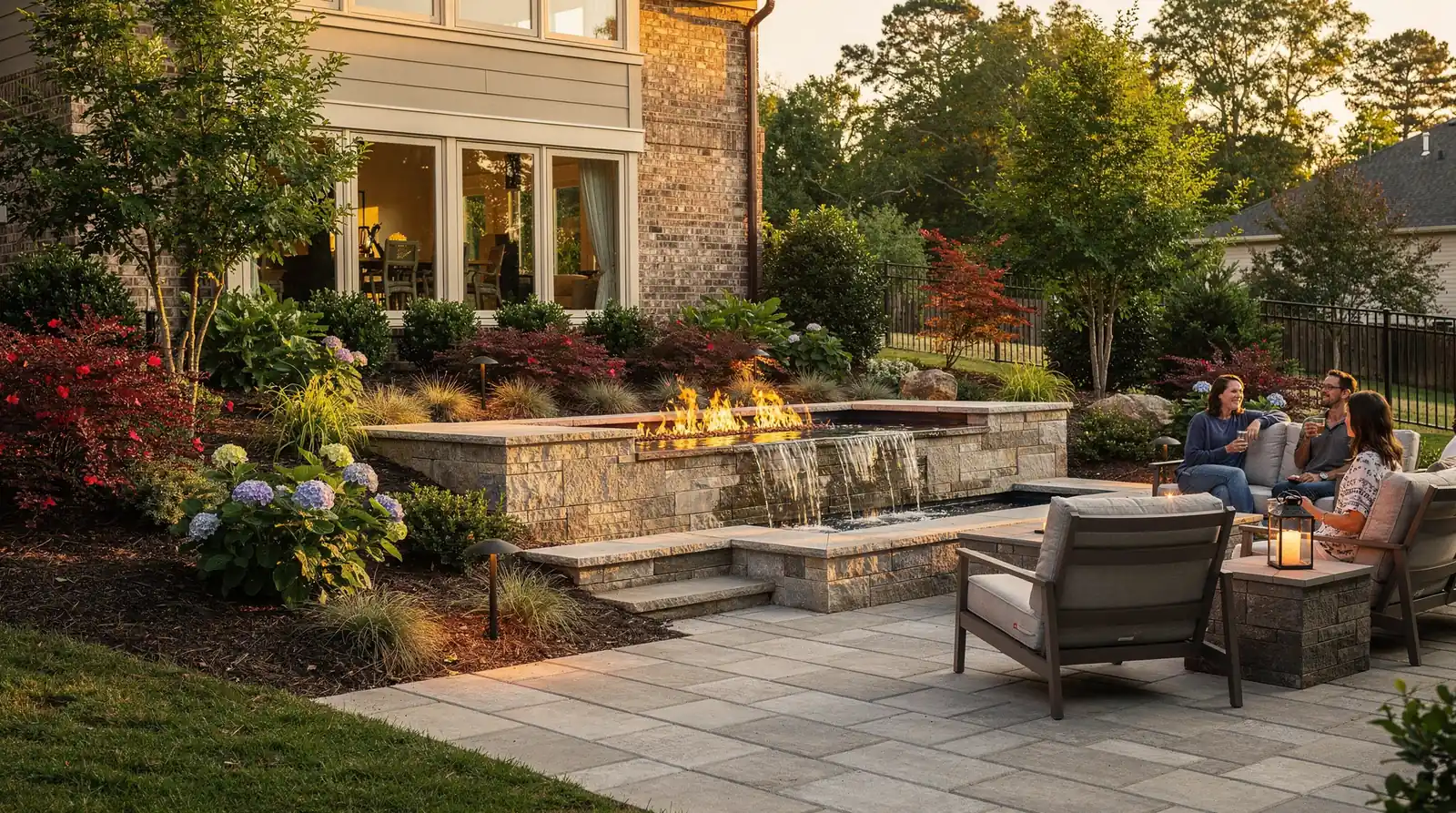
Placement determines whether a water feature becomes part of the way you experience the yard or simply occupies an unused corner. The best location balances visibility, sound, access, drainage, and how people already move through the space.
For homeowners considering water features Atlanta yards can support, start by identifying the places you naturally look toward and spend time. A fountain visible from the patio or kitchen window may provide more everyday enjoyment than a larger feature hidden at the back of the property.
A pond or waterfall can also become a destination farther from the house if a path, seating area, or garden gives people a reason to walk toward it.
Plan Sightlines Before Choosing the Exact Spot
A water feature does not have to sit in the center of the yard to become a focal point. It simply needs to be visible from the places that matter.
Walk through the property and check views from:
- Patios and decks
- Kitchen and living-room windows
- Main walkways
- Outdoor dining or seating areas
- Doors leading into the yard
Consider the view at night as well. If landscape lighting will eventually highlight the feature, nearby pathways, plants, and hardscape should be planned together rather than treated as separate projects.
Consider Sound as Well as Appearance
Waterfalls and fountains create different sound levels depending on the height of the drop, water volume, basin design, and surrounding materials.
If the feature is near a dining or conversation area, the sound should add background texture without forcing people to speak over it. A larger cascade can work farther from the patio, while a small bubbling fountain may suit a courtyard or compact seating area.
Hard surfaces can also reflect sound differently from planting beds and lawn. Homeowners combining water with patios, paths, or retaining elements may benefit from planning the feature alongside the surrounding hardscape design rather than adding it after those areas are complete.
Pay Attention to Grade and Drainage
Existing slope can influence where a pond, stream, or waterfall fits naturally, but it should not dictate placement without considering drainage.
The site needs to keep runoff from washing soil into the water feature or directing overflow toward the house. Poor drainage can also undermine stonework and create muddy areas around the perimeter.
Before excavation, evaluate where rainwater already travels across the property. If the yard has pooling, erosion, or uneven grades, yard grading may need to be addressed as part of the broader project.
Should the Water Feature Be Near the House?
Either near-house or farther-away placement can work. A feature closer to the house is easier to see from indoors and may integrate naturally with a patio or entertainment area. It can also make pump access and maintenance more convenient.
A feature near the edge of the yard can create a destination, especially when connected by a pathway or seating area.
This approach often works well in larger landscapes where a pond or waterfall can anchor a garden away from the main patio. The better option depends on how the yard is used, not on a universal placement rule.
What Does Pond Installation Involve?
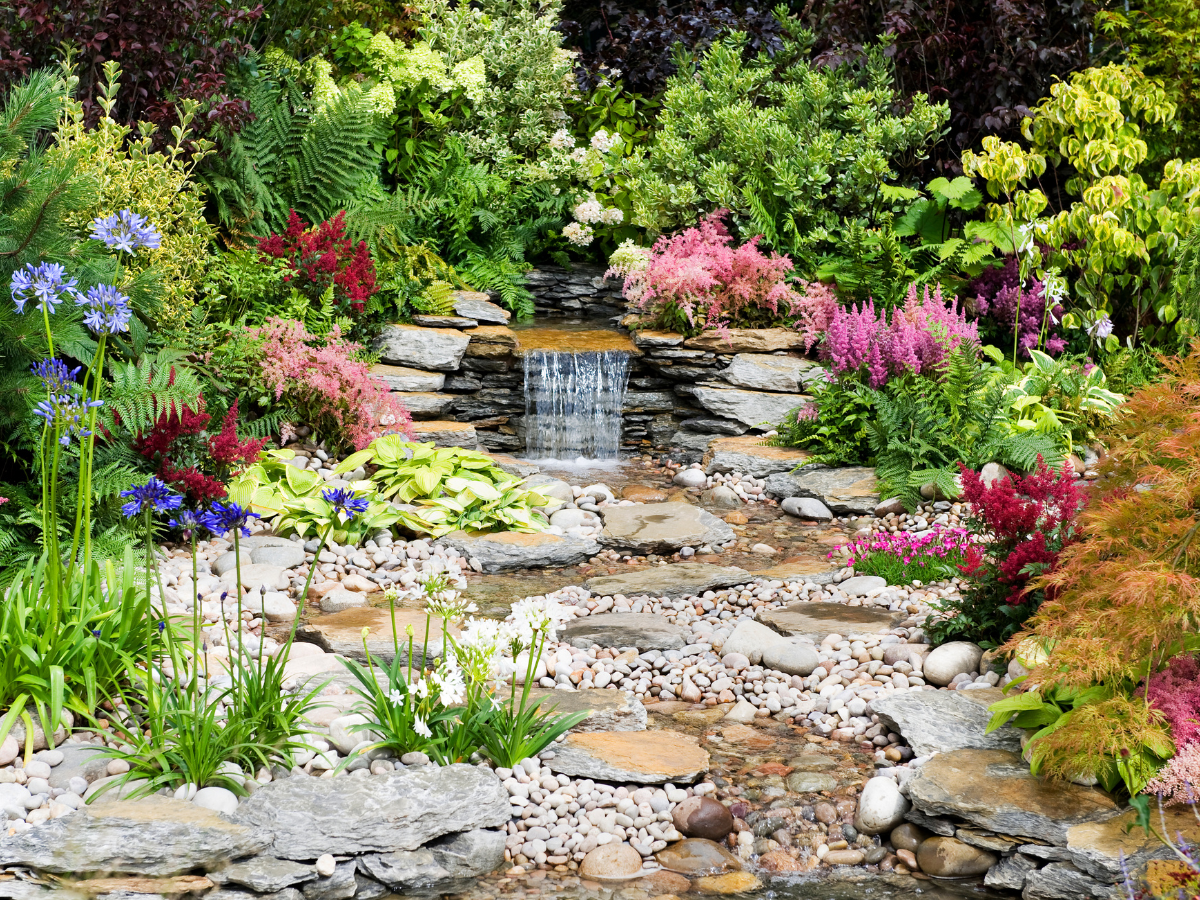
Pond installation requires more planning than digging a hole and adding water. The process generally includes determining size and depth, evaluating the site, excavating, installing the liner or basin system, adding pumps or filtration, setting stone, and finishing the surrounding landscape.
Start With the Pond’s Purpose
A decorative reflecting pond has different requirements from a pond intended for aquatic plants or fish.
Before construction begins, decide whether the pond is primarily meant to provide:
- A visual focal point
- Moving water and sound
- Aquatic planting
- Fish habitat
- Connection to a waterfall or stream
Those choices affect depth, circulation, filtration, shade, and maintenance.
Integrate the Pond Into the Existing Landscape
Stone edging can help soften the transition between water and surrounding planting beds, but the material should fit the rest of the property. A highly formal patio may suit cut stone or a cleaner basin edge, while an informal garden may work better with irregular natural stone and layered plantings.
If the yard already includes erosion or stormwater problems, those issues should be resolved independently rather than expecting the pond to manage runoff.
Atlanta properties with challenging drainage can benefit from broader landscape drainage planning before adding a feature that depends on stable surrounding grades.
Can You Install a Pond Yourself?
Small prefabricated or container ponds can be manageable DIY projects for homeowners comfortable with basic excavation, leveling, pumps, and electrical safety.
Larger ponds are more complex. Excavation, liner installation, pump sizing, filtration, stone placement, utility clearance, and grading all need to work together. Mistakes may lead to leaks, poor circulation, unstable edges, or difficult maintenance.
The larger and more integrated the pond becomes, the more useful professional planning is likely to be.
How Do You Design a Fountain That Fits the Yard?
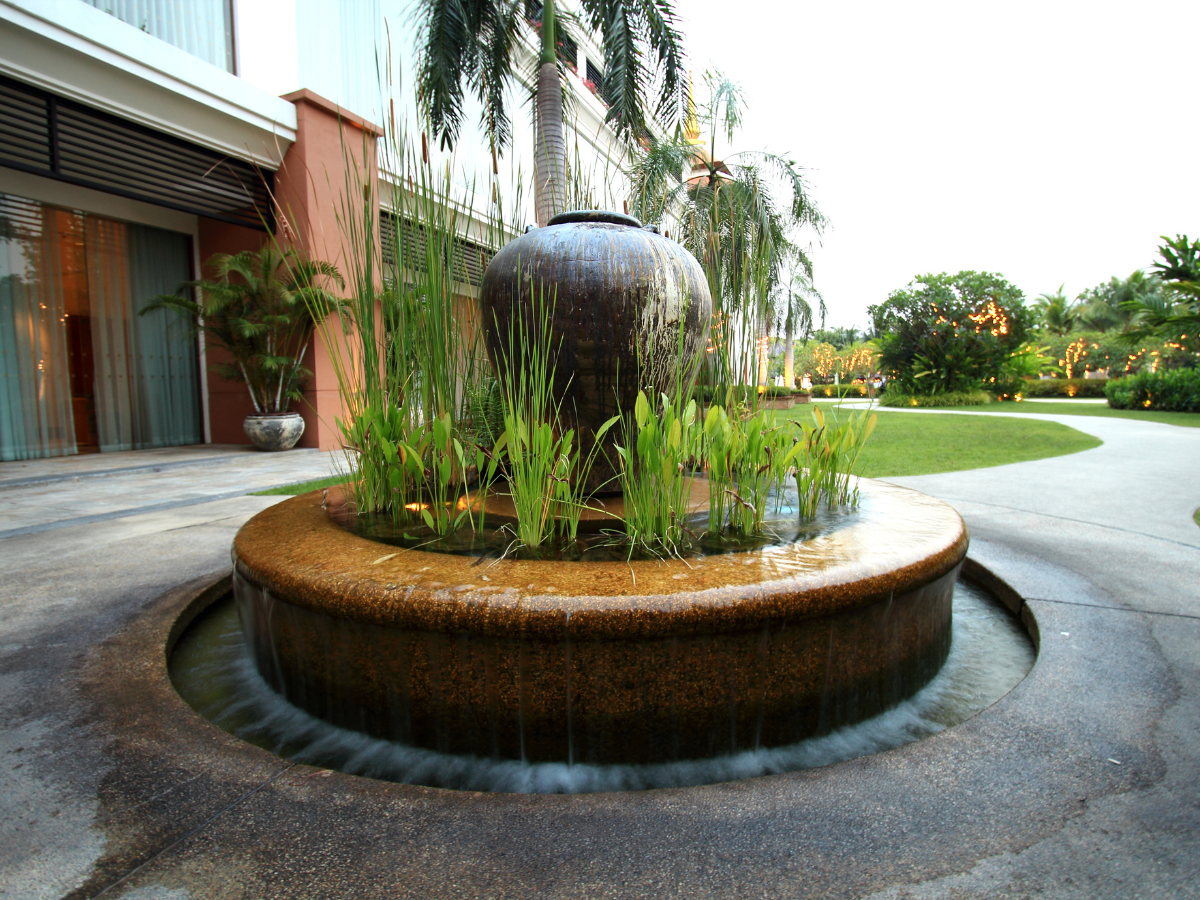
Good fountain design starts with scale. A feature that is too small may disappear against a large patio or planting bed, while an oversized fountain can dominate a compact courtyard.
Match the Fountain to the Surrounding Architecture
Material and shape should complement the house and hardscape. A traditional home may suit a stone pedestal or tiered fountain.
A contemporary landscape may work better with a simple water wall, geometric basin, or clean-lined vessel. Naturalistic designs can use boulders or carved stone to connect more closely with planting beds.
There is no single material that is automatically best for Atlanta. Durability depends on the specific stone, concrete, ceramic, metal, or composite product, along with installation quality, water chemistry, weather exposure, and maintenance.
Design Around Maintenance From the Start
A fountain needs access to its pump, reservoir, and electrical connection. It should also be possible to remove debris and clean surfaces without dismantling surrounding landscaping.
Trees directly overhead may increase leaf cleanup. Features exposed to strong sun may experience faster water loss through evaporation. Splash patterns matter as well, particularly beside wood, furniture, walkways, or surfaces that become slippery when wet.
The best water features Atlanta homeowners add are planned as part of the landscape rather than treated as decorative objects. When sightlines, sound, drainage, scale, circulation, and maintenance are considered together, ponds and fountains become easier to enjoy and easier to care for over time.
Should You DIY a Water Feature or Hire a Landscaper?
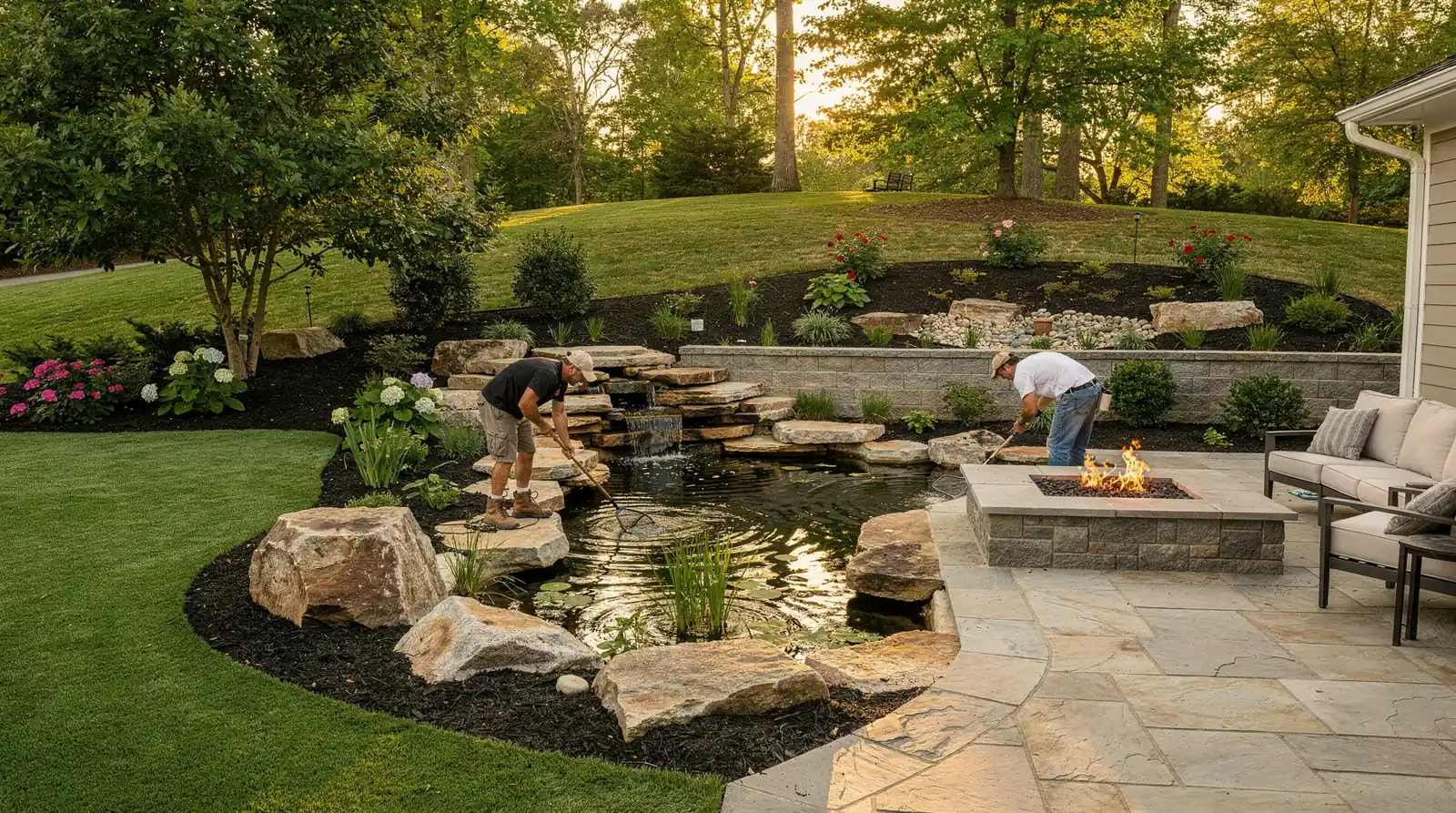
Some water features make excellent DIY projects. Others involve enough excavation, grading, plumbing, electrical work, and drainage planning that professional installation is the safer and more practical choice.
The dividing line is not simply size or budget. Homeowners comparing water features Atlanta yards can accommodate should consider what happens if the installation goes wrong.
A slightly uneven container fountain is usually easy to correct. A poorly graded pond, buried electrical problem, or leaking waterfall built into a retaining slope can require substantially more work to repair.
Which Water Features Are Realistic DIY Projects?
Self-contained features are generally the easiest place to start. These systems require little or no excavation and can often be repositioned if the original location does not work.
Good DIY candidates can include:
| Water Feature | DIY Suitability | Main Considerations |
|---|---|---|
| Tabletop or container fountain | Good for beginners | Level surface, power access, cleaning |
| Bubbling urn or water bowl | Good for confident DIYers | Reservoir setup, pump access, splash |
| Small preformed pond | Moderate | Excavation, leveling, liner support |
| Pondless waterfall kit | Moderate to advanced | Grade, reservoir, pump sizing, stone placement |
| Large pond or koi pond | Better suited to professional installation | Excavation, filtration, circulation, drainage |
| Stream or multi-level waterfall | Better suited to professional installation | Elevation, liner transitions, pumps, erosion control |
A simple installation still needs planning. Check how the feature will be powered, whether the surface is level, where overflow or splash will travel, and how easily the pump can be reached for cleaning.
Homeowners still deciding how a water element fits into a larger yard renovation can get useful context from broader outdoor makeover ideas, where scale and placement are considered alongside planting and hardscape.
When Does a DIY Pond Become Too Complicated?
Excavation is usually the point where the project becomes more demanding.
A small preformed pond can be manageable if the site is relatively level and the homeowner understands how to prepare the base. Larger ponds introduce more variables, including depth, liner installation, edge stabilization, circulation, filtration, overflow, stonework, and the effect of surrounding grades.
Fish add another layer of complexity because water quality, oxygenation, filtration, pond depth, and temperature become part of the design rather than optional details.
Before digging, underground utilities also need to be identified through the appropriate utility-location process. If the project involves new permanent electrical work, an electrician may be needed rather than treating the pump connection as a basic landscaping task.
What Problems Are Expensive to Fix Later?
The most troublesome mistakes tend to involve parts of the feature hidden beneath water, soil, or stone.
An incorrectly installed liner may leak in a location that is difficult to find. Poorly planned grades can allow stormwater and sediment to wash into a pond. An undersized pump may not produce the intended flow, while an oversized system can create excessive splash and unnecessary operating costs.
Stone is another common trouble spot. Large rocks need a stable base, particularly around pond edges and waterfalls. Their placement should look natural without creating unstable footing or making routine pump and liner access impossible.
This is where professional installation becomes easier to justify. It is less about paying someone to place decorative stone and more about coordinating the systems underneath the finished appearance.
Is Professional Fountain Design Worth It for a Small Yard?
Not every small fountain needs a landscape designer. A freestanding recirculating model beside a patio can often be selected and installed without a larger design project.
Professional planning becomes more useful when the fountain is built into masonry, connected to a new patio, integrated with landscape lighting, or intended to become the visual anchor for an entertainment area.
Water, seating, circulation, planting, and hardscape should work together in those situations. Ideas for outdoor entertainment spaces can help homeowners think beyond the fountain itself and consider how people will move, sit, dine, and gather around it.
What Should You Ask Before Hiring a Landscaper?
If professional installation makes more sense, compare contractors based on the scope of the proposed system rather than simply the lowest price.
Ask who will handle:
- Site grading and excavation
- Pump and filtration sizing
- Liner or basin installation
- Electrical coordination
- Stonework and edge treatment
- Overflow and surrounding drainage
- Planting around the finished feature
- Startup and maintenance instructions
- Future pump or filtration access
It is also worth asking to see completed projects similar in scale to yours. A contractor experienced with small decorative fountains may not necessarily approach a large koi pond or naturalistic stream the same way.
When Is DIY the Better Choice?
DIY makes sense when the feature is small, self-contained, reversible, and within your existing skills. Professional installation becomes more valuable as the project involves permanent construction, substantial excavation, complex water circulation, difficult grades, or integration with other landscape improvements.
Neither route is automatically better. The goal is to match the installation method to the consequences of getting it wrong.
For simpler water features Atlanta homeowners can often experiment successfully on their own. For ponds, streams, larger waterfalls, and integrated fountain systems, investing more time in professional planning can protect both the feature and the landscape surrounding it.
How Much Upkeep Do Water Features Need?
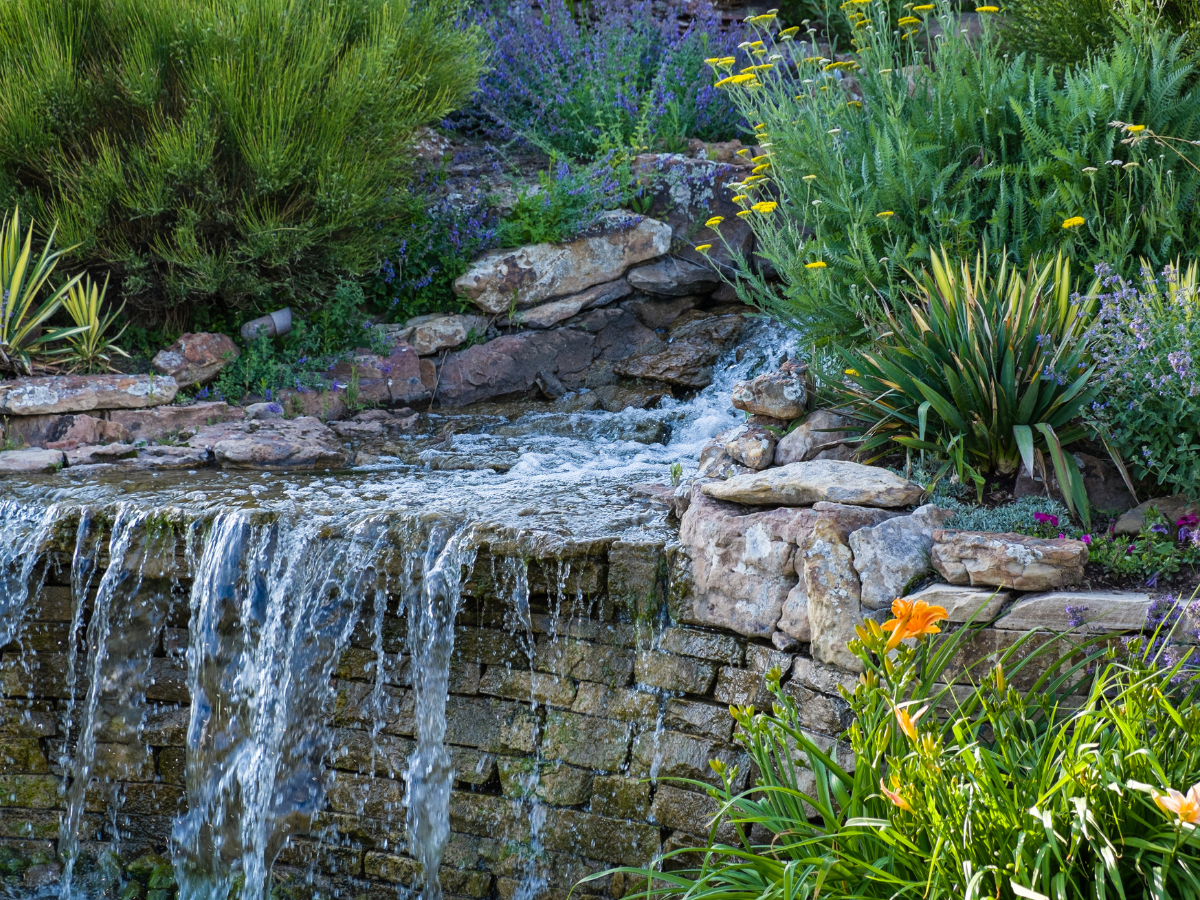
Water features are not maintenance-free, but the workload varies considerably by design. A small recirculating fountain has fewer moving parts and biological elements to manage than a pond filled with fish and aquatic plants. A pondless waterfall falls somewhere in between.
For homeowners comparing water features Atlanta yards can support, it helps to think beyond the initial installation. Pump access, surrounding trees, sunlight, filtration, water volume, and seasonal debris can all determine how much attention the feature requires over time.
| Feature Type | Typical Upkeep | Main Maintenance Tasks |
|---|---|---|
| Small fountain | Low to moderate | Cleaning, water-level checks, pump and nozzle inspection |
| Pondless waterfall | Low to moderate | Debris removal, reservoir checks, pump maintenance |
| Decorative pond | Moderate | Filtration, algae control, debris removal, plant care |
| Koi or fish pond | Moderate to high | Water quality, filtration, fish health, plants, circulation |
| Stream or larger waterfall | Moderate | Pump checks, debris removal, flow monitoring, stone and liner inspection |
The surrounding landscape can change these expectations. A fountain beneath mature trees may require more frequent cleaning than a larger pond in an open part of the yard.
Which Water Features Require the Least Maintenance?
Simple recirculating fountains and pondless features are generally among the easier options because they do not require the same ecosystem management as a fish pond.
They still need routine attention. Water levels drop through evaporation and splash, pumps can collect debris, and mineral deposits may build up on nozzles or surfaces. Periodic outdoor fountain maintenance can include cleaning the basin, checking for leaks, inspecting the pump, and preparing the system for freezing conditions.
Pondless waterfalls also need access to the underground reservoir and pump. Designing that access properly from the beginning makes maintenance much easier than having to move large stones every time the equipment needs attention.
How Often Should a Pond or Fountain Be Cleaned?
There is no universal cleaning interval. The right schedule depends on the feature and its surroundings. Instead of relying on the calendar alone, watch for signs that maintenance is needed:
- Reduced or uneven water flow
- Visible debris around a pump or intake
- Cloudy water
- Excessive algae
- Unusual pump noise
- Rapid or unexpected water loss
- Clogged fountain nozzles
- Accumulated leaves or sediment
Filters should be serviced according to the manufacturer’s instructions. Completely draining a pond should not automatically be part of routine cleaning, particularly in an established ecosystem where unnecessary disruption can affect beneficial biological activity.
Does Atlanta’s Climate Affect Water Feature Maintenance?
Yes. Atlanta’s warm summers, seasonal storms, falling leaves, and occasional freezing temperatures create different maintenance needs throughout the year.
Hot weather can increase evaporation, which makes water-level checks more important for fountains and pondless reservoirs. Sun exposure can also encourage algae growth in some systems.
Autumn creates a different problem. Leaves can collect in ponds, clog pump intakes, obstruct filters, and decompose in the water. Combining fall leaf removal with water-feature cleanup can reduce the amount of organic debris left in the system before winter.
Cold-weather preparation depends on the equipment and design. Some features can operate through mild winter conditions, while others may need pumps removed, lines drained, or exposed components protected. Manufacturer instructions should determine the correct approach for the specific system.
Do Fish and Aquatic Plants Add More Work?
Usually. Fish and aquatic plants make a pond more dynamic, but they also introduce biological needs that a decorative fountain does not have.
Fish require suitable water quality, circulation, oxygenation, and filtration. Feeding can add nutrients to the water, while waste and uneaten food can contribute to algae or water-quality problems if the system is not properly balanced.
Aquatic plants also need seasonal attention. Some require trimming, thinning, dividing, or removing dead growth. If fish are part of the plan, decide that before the pond is built. Depth, filtration, circulation, and equipment should be designed for a living pond rather than retrofitted later.
How Can the Surrounding Landscape Reduce Upkeep?
Good placement can reduce maintenance before it begins. A feature directly beneath deciduous trees will collect more leaves. Bare soil upslope can wash sediment into the water during heavy rain. Mulch placed too close to the edge may also end up in the basin or pond after storms.
Stable edging and well-managed planting beds can help keep soil and debris out of the water. It is also useful to leave enough access around pumps, filters, reservoirs, and other equipment so maintenance does not require dismantling the landscape.
Should You Hire Someone for Ongoing Maintenance?
That depends on the complexity of the system and how involved you want to be. Homeowners can usually handle routine tasks such as skimming leaves, topping off water, wiping fountain surfaces, and checking visible pump intakes.
Larger ponds may require more specialized attention to filters, pumps, aquatic plants, water quality, or fish. If you are considering professional maintenance, ask exactly what is included.
Pump servicing, filter cleaning, seasonal cleanup, algae treatment, winter preparation, equipment replacement, and fish care may not all fall under the same service agreement.
The most practical water features Atlanta homeowners can choose are those whose maintenance requirements match the amount of time they actually want to spend on them. Planning for upkeep before installation makes it much easier to enjoy the feature without turning it into an unexpected weekend chore.
Frequently Asked Questions About Water Features in Atlanta
What Type of Water Feature Works Best for a Small Atlanta Yard?
Small yards usually benefit from compact features that provide movement and sound without taking over the available space. Freestanding fountains, wall fountains, bubbling urns, water bowls, and small pondless systems can all work well.
A traditional pond is still possible in a smaller yard, but it requires more usable ground area and a layout that leaves enough room for circulation, planting, and maintenance access. Existing patios and garden paths also matter. A water feature should strengthen the layout rather than narrow a walkway or crowd a seating area.
Even relatively small garden pathways can incorporate water features when the scale and placement fit the surrounding landscape.
Does Adding a Water Feature Increase Home Value?
A well-designed water feature can improve curb appeal and make an outdoor area more memorable, but homeowners should not assume that a fountain, pond, or waterfall will produce a specific increase in resale value.
Buyer preferences vary. Some buyers may see a professionally installed feature as an attractive addition, while others may consider its maintenance requirements.
Overall landscape quality, installation condition, compatibility with the home, and the usefulness of the surrounding outdoor space are likely to matter more than the presence of water alone.
For that reason, water features Atlanta homeowners add are generally better viewed as lifestyle and landscape improvements first, with potential resale appeal as a secondary consideration.
Is a Pondless Waterfall Really Lower Maintenance Than a Pond?
Usually, but “lower maintenance” does not mean maintenance-free.
A pondless waterfall recirculates water through a concealed reservoir rather than an exposed pond. That removes many of the tasks associated with maintaining fish, aquatic plants, and a larger open body of water.
Homeowners still need to monitor water levels, clear debris, keep the pump intake unobstructed, and occasionally clean stones or other surfaces. The surrounding trees, amount of sunlight, reservoir size, and pump design can all affect how much attention the system requires.
Will a Water Feature Attract Mosquitoes?
Moving water is generally less favorable for mosquito breeding than stagnant water, but no outdoor water feature should simply be assumed to be mosquito-proof.
A properly circulating fountain or waterfall keeps water moving. Ponds require more thoughtful management, particularly around shallow or stagnant areas where circulation is weak.
Maintaining pumps, removing accumulated debris, and addressing standing water around the feature can reduce opportunities for mosquitoes to breed. If a pond includes plants, its circulation system should still prevent isolated pockets of stagnant water where possible.
How Much Space Do I Need for a Backyard Pond?
There is no standard minimum because pond size depends on the intended use and the proportions of the yard.
A decorative pond without fish can be relatively compact. A koi pond typically needs more consideration for depth, filtration, circulation, fish load, and equipment access. Waterfalls and streams also need enough surrounding area for stonework and safe transitions into the landscape.
Before choosing dimensions, mark the proposed footprint in the yard and walk around it. This simple step can reveal whether the pond will interfere with paths, seating, lawn use, or maintenance access.
How Much Does a Water Feature Cost in Atlanta?
Cost depends on the type and complexity of the installation. A self-contained fountain may require little site preparation, while a custom pond or waterfall can involve excavation, liners or basins, pumps, filtration, electrical work, stone, grading, and surrounding landscaping.
Rather than comparing projects only by feature size, look at what the estimate includes. Pump quality, stonework, drainage preparation, filtration, planting, access for future maintenance, and electrical coordination can substantially change the scope.
Homeowners researching water features Atlanta contractors install should ask for an itemized or clearly defined project scope so competing proposals can be compared on equivalent work.
Who Should Design and Install a Larger Water Feature?
For a custom pond, integrated waterfall, stream, or built-in fountain, look for a landscaping company with experience coordinating water circulation, grading, drainage, stonework, and the surrounding landscape.
Ask prospective contractors to show completed projects similar to the feature you want. It is also worth discussing pump access, filtration, overflow management, electrical coordination, expected maintenance, and what happens if repairs are needed later.
Glover Landscapes states that it has more than 25 years of landscaping experience and serves Atlanta and surrounding areas. Its company background also confirms that its landscapers are insured.
What Should I Ask for Before Approving the Design?
Before construction begins, you should understand where the feature will sit, how large it will be, what equipment it needs, where electrical power will come from, and how water will circulate.
The proposal should also make clear:
- What excavation and grading are included
- Which pump and filtration system will be installed
- How overflow and surrounding drainage will be handled
- Which stone or finish materials are included
- How pumps and filters can be accessed for maintenance
- Whether planting around the feature is included
- What ongoing maintenance the system will require
- What warranties apply to equipment and installation
For homeowners ready to move from ideas to a defined scope, the company’s project consultation process provides a direct way to discuss the site and request an estimate.
A water feature is easiest to enjoy when its scale, maintenance requirements, and construction details are understood before installation begins. That preparation matters just as much as choosing between a pond, fountain, waterfall, or stream.
Conclusion
The right water feature can bring movement, sound, and a sense of tranquility to an Atlanta landscape while adding a distinctive focal point to the overall design.
From subtle bubbling fountains and pondless waterfalls to garden ponds and other custom features, the best choice should complement your available space, maintenance preferences, and existing landscaping.
Thoughtful placement and professional installation can help the feature feel naturally integrated into the yard rather than added as an afterthought.
For custom water features and professional landscape design, choose Glover Landscapes. If you’re ready to create a more peaceful and inviting outdoor space, call (404) 982-4176 to speak with the team at Glover Landscapes or visit their website to get your free landscaping estimate today.