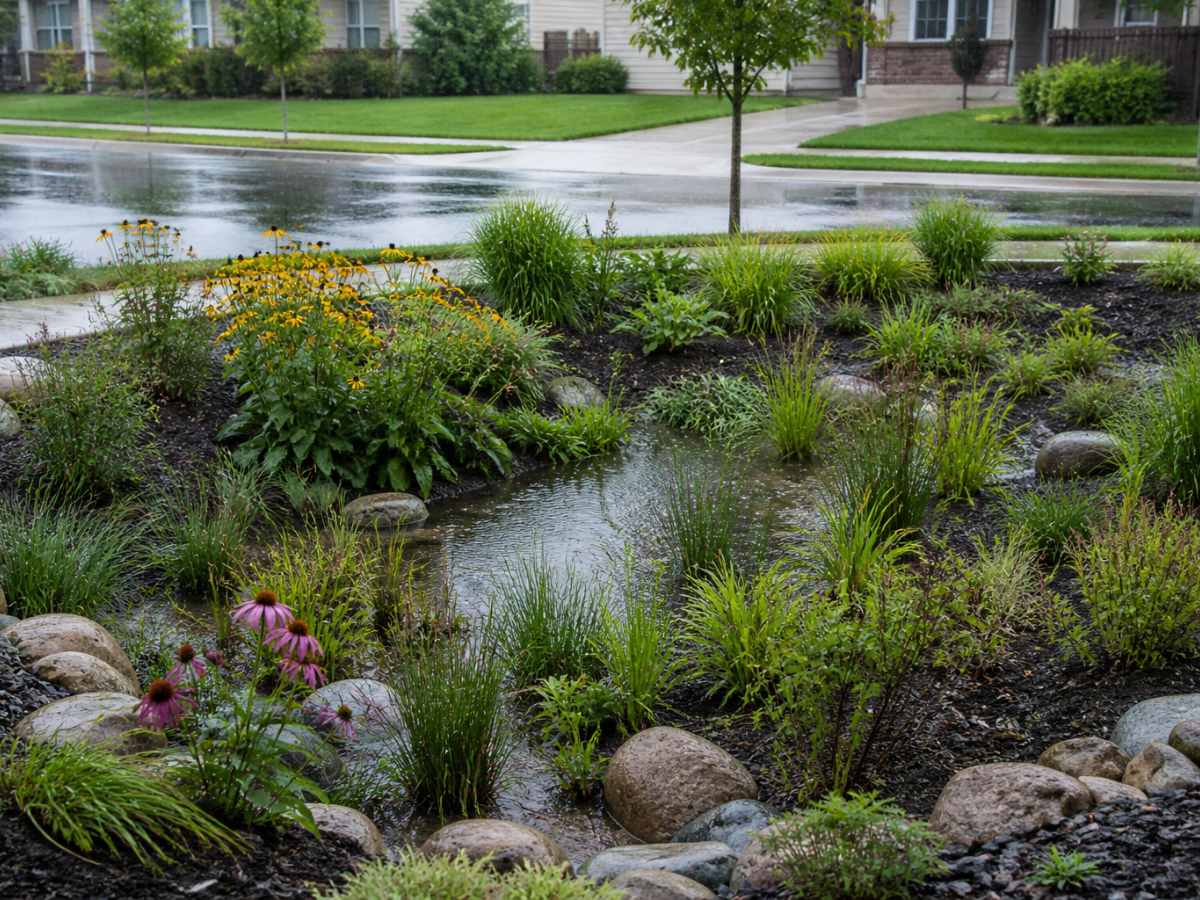
Heavy rain doesn’t have to mean runoff, puddling, or erosion around your home. A rain garden offers a practical way to manage excess water while enhancing your landscape at the same time. Instead of directing water into drains, it allows rainfall to be absorbed naturally into the ground.
Understanding what rain gardens are and how they work helps you see how they reduce runoff, filter pollutants, and support healthier soil conditions. These shallow, planted areas are designed to capture water from roofs, driveways, and lawns, slowing it down and allowing it to soak in gradually.
With the right design and plant selection, a rain garden can improve drainage, protect your property, and add a functional, natural feature to your outdoor space.
How Rain Gardens Support Soil Health and Plant Growth
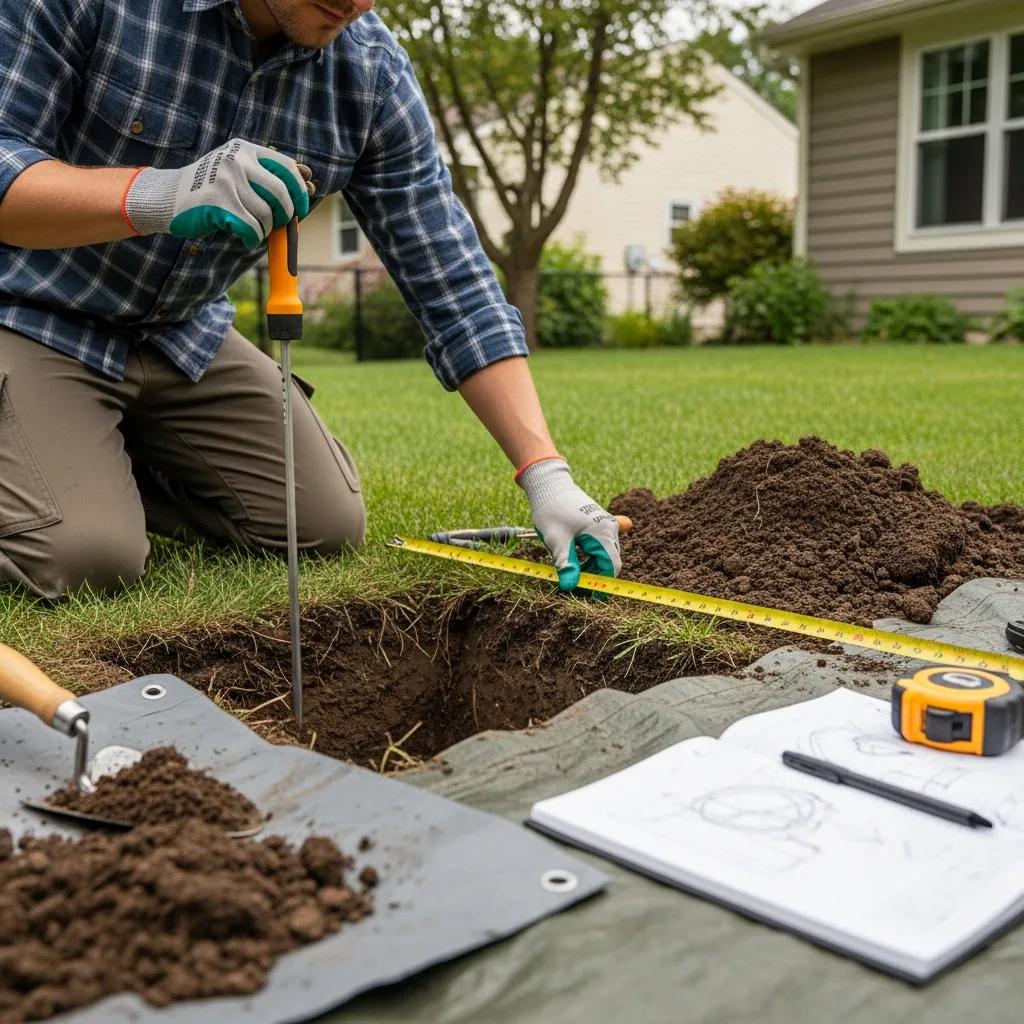
Rain gardens are designed to slow down and absorb rainwater before it becomes a problem. Instead of allowing water to rush off hard surfaces like driveways or rooftops, these gardens create a controlled space where runoff can collect and gradually soak into the ground.
The way rain gardens function is fairly straightforward, but the impact is significant. Water is directed into a shallow, landscaped area where it temporarily pools.
From there, it begins to filter through layers of soil and plant roots. This process reduces the volume of water moving across the surface and helps prevent drainage systems from becoming overwhelmed during heavy rain.
Because of this design, rain gardens play an important role in controlling runoff while supporting a more natural water cycle.
Key Design Elements That Influence Performance
The effectiveness of rain gardens depends largely on how they are planned and built. Location is one of the most important factors. A garden should be placed where it can easily receive runoff from nearby surfaces, but not so close to structures that it causes unwanted moisture issues.
Sizing also matters. A garden that is too small may not handle the volume of water during a storm, while one that is too large may not function efficiently. Finding the right balance ensures that water is absorbed at a steady, manageable rate.
Plant selection adds another layer of performance. Native plants are often the best choice because they are adapted to local conditions and can handle both wet and dry periods. Their root systems also help improve soil structure, allowing water to move more easily through the ground.
How Rain Gardens Filter And Absorb Water
One of the most valuable aspects of rain gardens is how they clean water as it moves through the soil. When runoff enters the garden, it often carries small amounts of debris, oil, or other pollutants from surrounding surfaces.
As the water settles and begins to infiltrate, these particles are naturally filtered out. Soil layers act as a barrier, while plant roots help break down certain contaminants. By the time the water reaches deeper layers, it is significantly cleaner than when it entered the garden.
This filtration process not only improves water quality but also supports healthier soil and plant life within the garden itself.
Supporting Groundwater And Local Ecosystems
Rain gardens do more than manage surface water. They also help replenish groundwater supplies by allowing water to soak into the earth rather than being diverted into storm drains. This contributes to a more balanced local water system, especially in areas where natural absorption has been reduced by development.
Over time, rain gardens can also support a wider range of plant and animal life. The combination of moisture, native vegetation, and improved soil conditions creates a small but meaningful habitat. Birds, pollinators, and beneficial insects are often drawn to these spaces, adding ecological value beyond water management.
Reducing Flooding And Erosion In Urban Areas
In areas with a high number of paved surfaces, water tends to move quickly and collect in low spots. This can lead to localized flooding and erosion, especially during heavy storms. Rain gardens help address this issue by capturing water early and slowing its movement.
By spreading out the absorption process, they reduce pressure on drainage systems and limit the amount of water that reaches streets or nearby waterways all at once. This makes them a practical solution for managing stormwater in both residential and urban settings.
Why Rain Gardens Are A Practical Long-Term Solution
Rain gardens offer a simple but effective way to manage water runoff while improving the surrounding environment. They combine thoughtful design, natural filtration, and ecological benefits into a single feature that continues to perform over time.
When planned correctly, rain gardens not only reduce runoff and flooding risks but also contribute to healthier soil, cleaner water, and a more balanced landscape.
Why Rain Gardens Offer Both Environmental And Practical Value
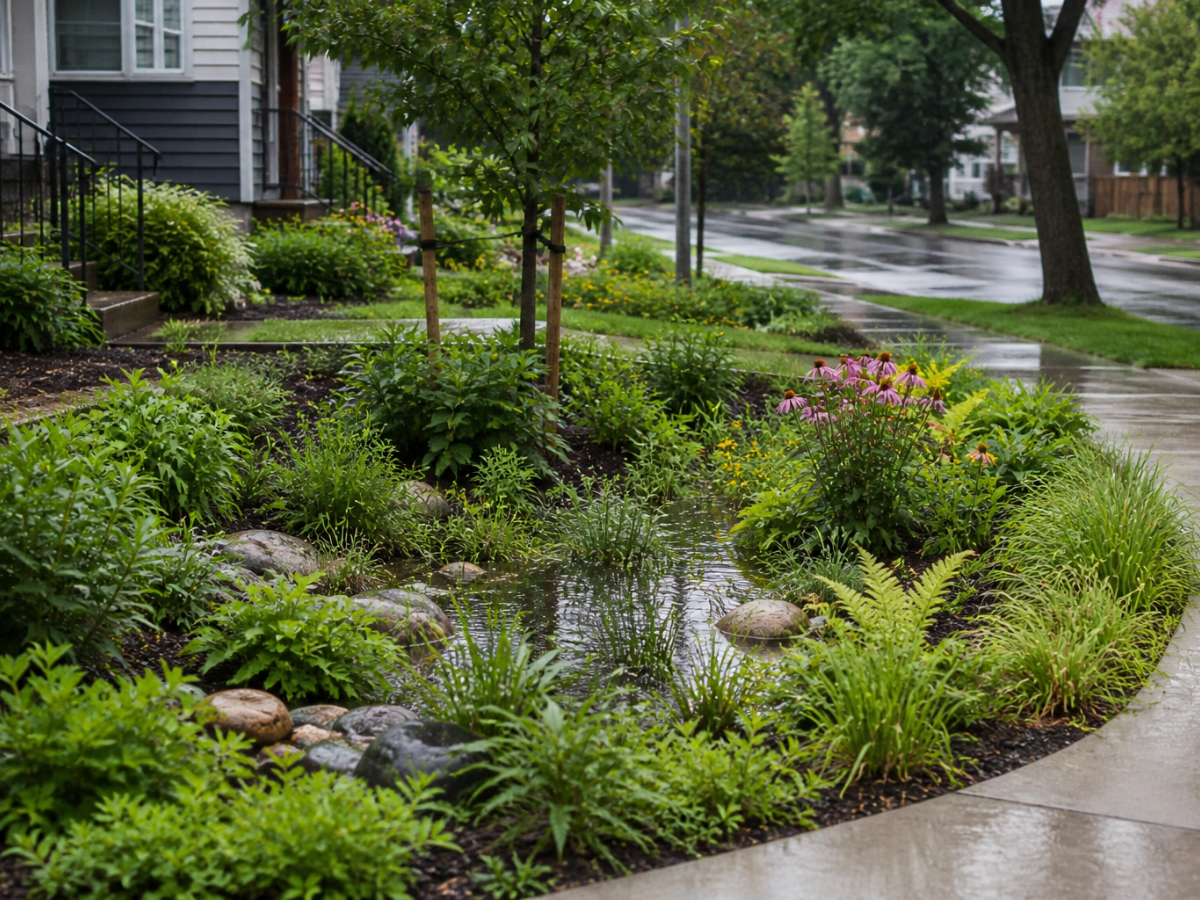
Rain gardens are often seen as a landscaping feature, but their impact goes well beyond appearance. At their core, rain gardens are designed to manage stormwater in a way that supports both the environment and the surrounding property.
By capturing runoff and allowing it to soak into the ground, they reduce the strain on drainage systems and help prevent water from pooling in unwanted areas.
From a practical standpoint, this means fewer issues with standing water, erosion, or runoff flowing toward foundations and walkways. Over time, rain gardens can also reduce maintenance needs by stabilizing soil and improving how water moves across the landscape.
At the same time, they bring environmental benefits that extend beyond the property itself. By slowing and filtering runoff, rain gardens help protect nearby waterways and contribute to a healthier local ecosystem.
How Rain Gardens Improve Water Quality
One of the most important functions of rain gardens is their ability to naturally filter water. When rainwater flows across hard surfaces, it often picks up contaminants such as dirt, oil, and other pollutants. Instead of sending this untreated water directly into storm drains, rain gardens provide a place for it to be cleaned.
As water moves through the soil and plant roots, many of these pollutants are trapped or broken down. The soil acts as a natural filter, while plants help absorb excess nutrients and support the breakdown of organic material. By the time the water reaches deeper layers, it is significantly cleaner.
This process helps protect streams, rivers, and other water sources from contamination. It also supports healthier conditions for aquatic life, which depends on clean water to thrive.
Supporting Sustainable Water Management In Urban Areas
In areas with a high number of paved surfaces, natural water absorption is often limited. Rain gardens help restore part of that natural process by giving water a place to go other than storm drains. This makes them an important tool in sustainable water management, especially in urban environments.
By reducing the volume and speed of runoff, rain gardens lower the risk of localized flooding. They also help recharge groundwater, which can be especially valuable in regions where water resources are under pressure.
As more communities look for ways to manage water more effectively, rain gardens are becoming a practical solution that can be implemented on both small and large scales. Their ability to work with natural systems rather than against them makes them a long-term option for improving water management.
Designing Rain Gardens With The Right Plants And Soil
The success of rain gardens depends on thoughtful design, particularly when it comes to plant selection and soil composition. Native plants are often the best choice because they are adapted to local conditions and can handle periods of both heavy moisture and dryness.
Plants like swamp milkweed, blue flag iris, and Joe Pye weed are commonly used because they thrive in these changing conditions. Their deep root systems also help improve soil structure, allowing water to move more easily through the ground.
Soil composition is just as important. A mix that promotes both drainage and water retention helps the garden function properly. If the soil drains too quickly, it may not filter water effectively. If it drains too slowly, water may pool longer than intended. Finding the right balance ensures that the garden performs as expected.
Creating A Landscape That Works With Nature
Rain gardens offer a way to manage water while improving the look and function of a landscape. They reduce runoff, filter pollutants, and support plant and wildlife habitats, all while addressing common drainage concerns.
When designed carefully, rain gardens become more than just a solution to water issues. They create a space that feels integrated with the natural environment, offering both practical benefits and long-term value for homeowners and communities alike.
How To Prepare Your Site For Rain Garden Installation
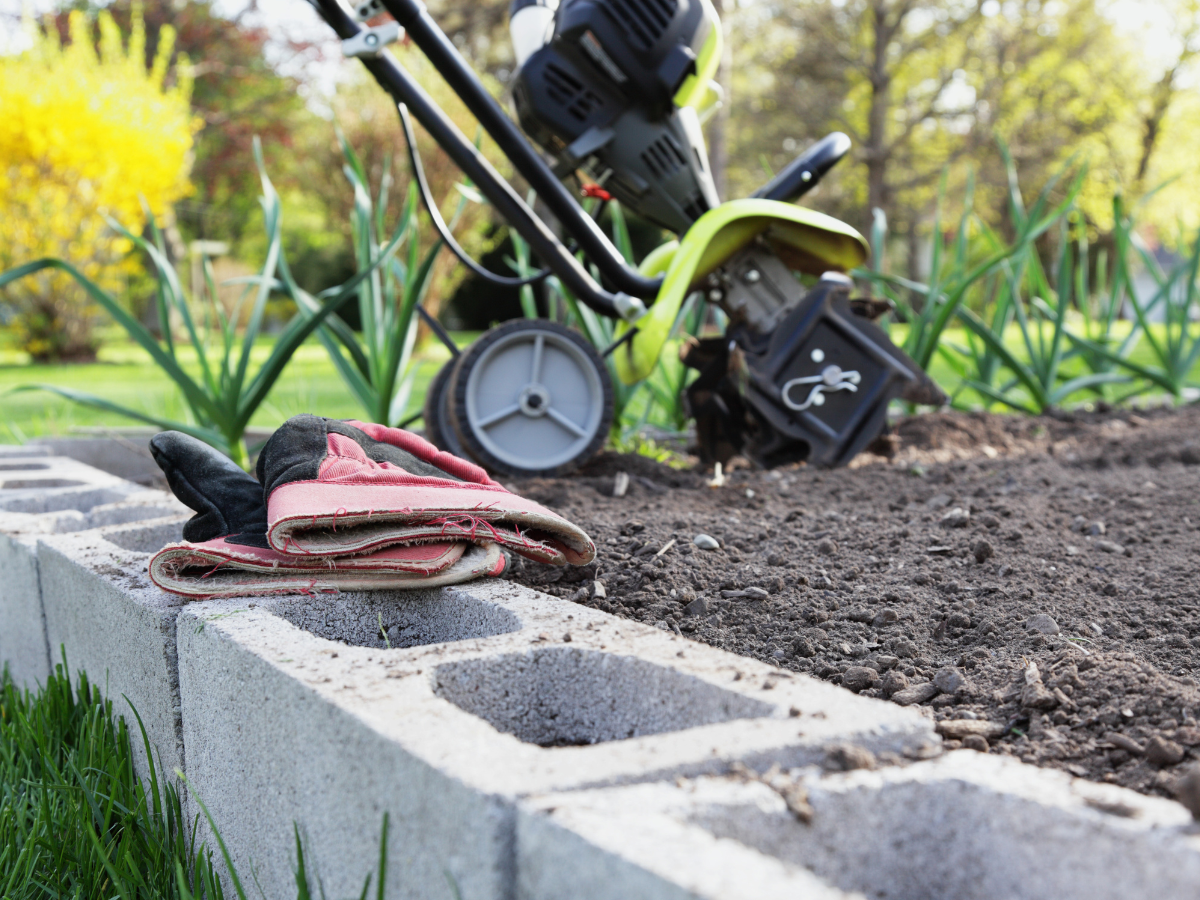
A successful installation starts well before digging begins. Taking time to evaluate the space helps ensure your rain garden performs as intended over the long term.
Start by observing how water moves across your property during and after rainfall. This will help you identify natural low points where water already collects, which are often ideal locations.
Soil testing is another important step. Some soils drain quickly, while others hold water for longer periods. Understanding this balance helps you determine how deep the garden should be and whether the soil needs to be amended.
Sunlight exposure also plays a role, since it influences which plants will thrive once the garden is established. At this stage, it is helpful to sketch out a basic plan.
Consider the size and shape of the garden, how water will enter it, and how it will overflow during heavy rain. Thoughtful preparation makes the rest of the process much smoother and sets the foundation for effective rain gardens.
What Are The Key Steps In Building A Rain Garden
Once the site is selected and planned, the building process can begin. The first step is excavation. This involves digging out the garden area to a depth that supports both water collection and proper drainage. The shape is typically shallow and bowl-like, allowing water to spread out rather than pool in one spot.
After excavation, the soil may need to be improved to support infiltration. In some cases, adding compost or sand can help create the right balance between drainage and water retention. This step is especially important for ensuring that rain gardens do not hold water longer than intended.
Planting comes next. Native plants are usually arranged in zones based on how much moisture they can tolerate. Those that handle wetter conditions are placed in the center, while plants that prefer drier soil are positioned along the edges. This layered approach helps the garden adapt to changing water levels.
Finally, attention should be given to how water flows into the space. Gentle grading or small channels can direct runoff into the garden without causing erosion. When these elements are combined, the result is a system that manages water naturally and efficiently.
Planning Considerations That Impact Long-Term Performance
Beyond the physical steps of installation, several planning details influence how well rain gardens function over time. Water flow is one of the most important factors. If too much water enters too quickly, the garden may struggle to keep up. On the other hand, too little flow may limit its effectiveness. Finding the right balance ensures consistent performance.
Soil composition continues to matter even after installation. Over time, compacted soil can reduce drainage, so it is important to choose a mix that remains stable while still allowing water to pass through. Incorporating organic material can also support plant health and improve overall soil structure.
Sun exposure is another detail that shapes long-term success. A garden that receives the right amount of light will support stronger plant growth, which in turn improves water absorption and filtration. Matching plant choices to these conditions helps reduce maintenance and keeps the system working as designed.
Creating Rain Gardens That Work With Your Landscape
Installing rain gardens is not just about following a set of steps. It is about creating a feature that works naturally with your property. When site preparation, construction, and planning all align, the result is a landscape element that manages water effectively while blending into its surroundings.
Over time, well-designed rain gardens become easier to maintain and more efficient at handling runoff. They support plant growth, improve drainage, and reduce the impact of heavy rainfall. With the right approach, they can serve as both a practical solution and a long-term improvement to the landscape.
How to Maintain and Care for Your Rain Garden for Long-Term Success?
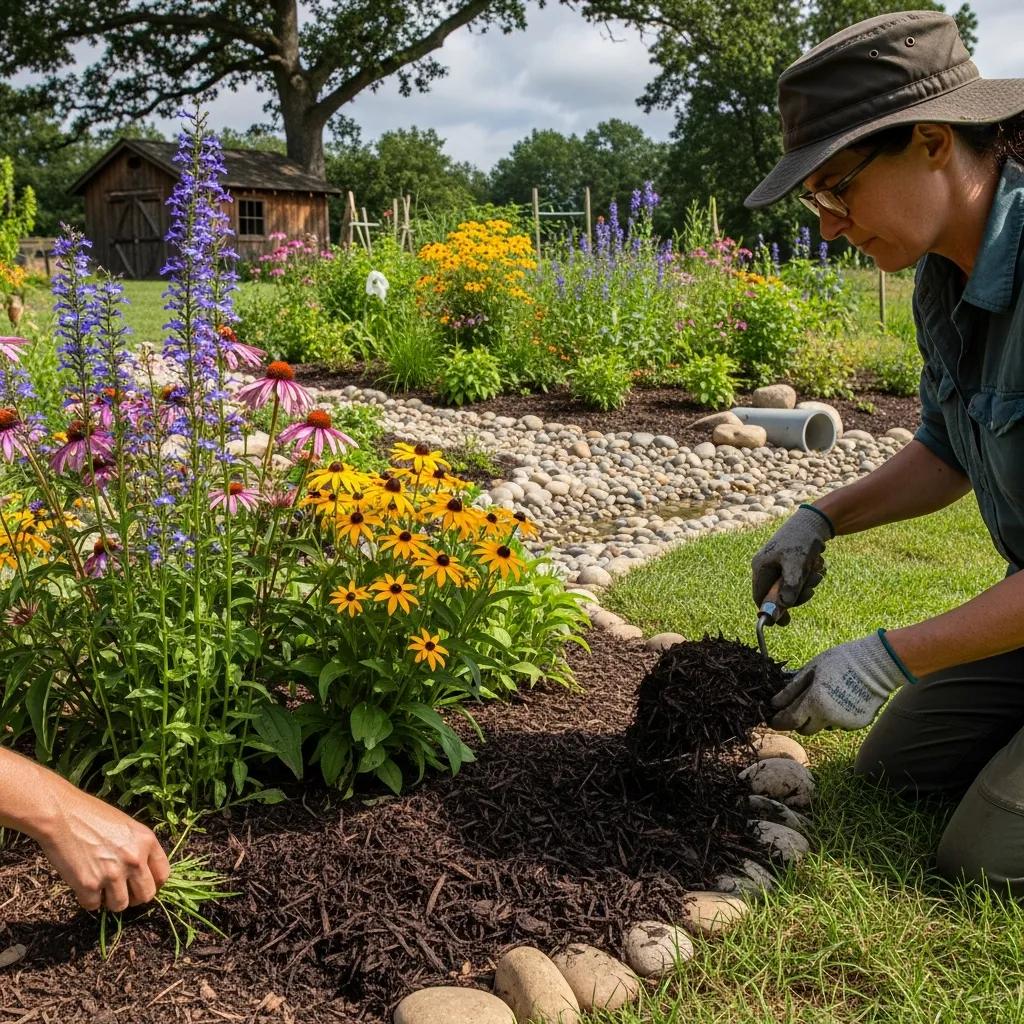
Keeping rain gardens healthy over time comes down to consistent, practical care. While these systems are designed to be low maintenance, they still benefit from regular attention. When properly maintained, rain gardens continue to manage runoff effectively while supporting plant growth and soil health.
Routine Upkeep That Keeps Rain Gardens Functioning
The most important part of maintenance is simply paying attention to how the garden is performing. After heavy rain, take a moment to observe how water moves through the space. If water pools for too long or struggles to enter the garden, it may be a sign that adjustments are needed.
Clearing debris from inlets helps keep water flowing freely. Leaves, dirt, and small branches can build up over time and restrict drainage. Removing these blockages ensures the system continues to work as intended. In some cases, sediment may settle at the bottom of the garden. Gently removing excess buildup helps maintain proper absorption without disturbing plant roots.
Understanding Watering Needs At Different Stages
Watering requirements for rain gardens change depending on how established the plants are. In the early stages, consistent watering is important while roots develop. Even though the garden is designed to collect rainwater, young plants still need support during dry periods.
As the garden matures, watering becomes less of a concern. Established rain gardens are typically able to rely on natural rainfall, with plants adapting to both wet and dry conditions. During extended dry spells, occasional watering can still help maintain plant health, but it should be done thoughtfully to avoid overwatering.
Managing Weeds And Supporting Soil Health
Weeds can compete with native plants for nutrients and space, especially in the first year. Regularly removing unwanted growth helps the intended plants thrive and keeps the garden balanced. Over time, as native species fill in, weed pressure usually decreases.
Mulching is another simple but effective practice. A layer of mulch helps retain moisture, reduces weed growth, and stabilizes soil temperature. It also protects the surface from erosion during heavy rain. Refreshing mulch as needed keeps the garden looking maintained while supporting its overall function.
Seasonal Care To Keep Rain Gardens Resilient
Each season brings different maintenance needs, and adjusting your approach throughout the year helps keep rain gardens performing well. In spring, it is a good time to replace any plants that did not survive the winter and to tidy up the space for new growth.
During summer, the focus shifts to monitoring moisture levels. While rain gardens are built to handle water, extended heat can still stress plants. Checking soil conditions and providing occasional support can prevent long-term damage.
In the fall, clearing out dead plant material and debris prepares the garden for cooler weather. This also helps maintain proper water flow during seasonal rains. Winter typically requires the least effort, but occasional checks can ensure the structure remains intact.
Addressing Common Challenges Before They Escalate
Even well-designed rain gardens can encounter issues over time. Sediment buildup, uneven drainage, or struggling plants are all signs that the system may need minor adjustments. Catching these early makes them easier to fix and prevents larger problems down the line.
Plant health is another key indicator. If certain areas are not thriving, it may be worth reassessing plant placement or soil conditions. Sometimes, small changes can make a significant difference in how the garden performs.
How Do Rain Gardens Integrate With Other Sustainable Landscaping Features?
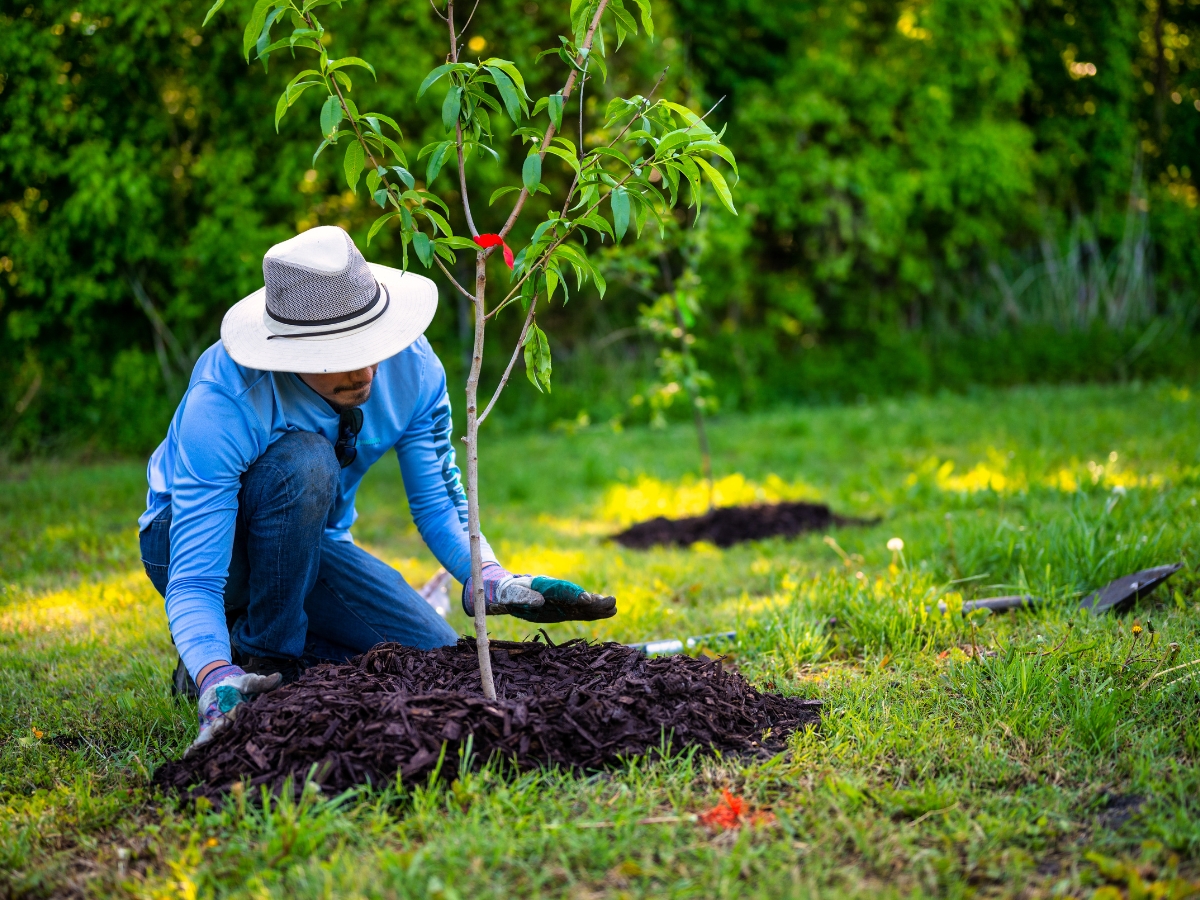
Rain gardens work best when they are part of a larger, thoughtfully designed landscape. Rather than functioning as a standalone feature, they can connect with other elements to manage water more effectively while improving the overall look and feel of a yard.
When planned together, these features create a system that supports drainage, plant health, and long-term sustainability. Integrating rain gardens into a broader design also helps distribute water more evenly across a property.
Instead of directing all runoff to a single area, the landscape can guide water through multiple zones, allowing it to soak into the ground gradually. This approach not only improves performance but also reduces stress on any one part of the system.
Complementary Features That Support Water Management
Several landscaping elements pair naturally with rain gardens and enhance their effectiveness. Permeable paving is one of the most practical additions.
Unlike traditional concrete or asphalt, permeable surfaces allow water to pass through and soak into the soil below. When used alongside rain gardens, they help reduce runoff and prevent water from pooling in unwanted areas.
Another option is incorporating small water features such as ponds or decorative basins. These features can collect excess water during heavy rainfall and release it slowly over time.
When designed correctly, they create a natural transition between drainage and aesthetics, adding visual interest while supporting water control. Xeriscaping also complements rain gardens by focusing on drought-tolerant plants in surrounding areas.
This balance allows the landscape to handle both wet and dry conditions without requiring excessive maintenance or irrigation. Together, these elements create a more resilient outdoor space that adapts to changing weather patterns.
Designing A Cohesive And Functional Landscape
The key to successful integration is thoughtful design. Rain gardens should be placed where they can naturally receive runoff, such as near downspouts or along slopes. From there, other features can be arranged to guide water toward the garden without overwhelming it.
Pathways, grading, and plant placement all play a role in how water moves through the space. Subtle changes in elevation can direct flow, while plant groupings help slow it down and encourage absorption. When these elements are aligned, the entire landscape works together rather than competing for space or function.
A cohesive design also considers how the space will be used day to day. Walkways, seating areas, and planting beds can be positioned to maintain accessibility while still supporting water management.
This balance ensures the yard remains practical while still benefiting from the environmental advantages of rain gardens.
Enhancing Eco-Friendly Yards Through Smart Design
Rain gardens contribute to eco-friendly landscaping by reducing reliance on traditional drainage systems. Instead of sending water into storm drains, they allow it to filter naturally through soil and plant roots. This process helps improve water quality while supporting local ecosystems.
Beyond their functional role, rain gardens also add visual appeal. With the right plant selection and layout, they can become a focal point that blends seamlessly with the rest of the yard. Seasonal changes in color and texture bring variety to the space, making it feel dynamic throughout the year.
Long-Term Benefits Of Integrated Landscaping
When rain gardens are combined with other sustainable features, the benefits extend well beyond water management.
The landscape becomes more efficient, easier to maintain, and better suited to handle extreme weather conditions. Over time, this integrated approach can reduce erosion, support plant health, and improve the overall durability of the outdoor space.
By thinking of rain gardens as part of a larger system, homeowners can create a landscape that is both functional and visually cohesive.
The result is a yard that not only manages water effectively but also supports a more sustainable and balanced environment.
Conclusion
Rain gardens are a beautiful, eco-friendly solution for managing stormwater runoff, reducing erosion, and filtering pollutants before they reach local waterways.
For expert landscaping design and installation of a rain garden tailored to your property’s unique needs, trust Glover Landscapes. Ready to turn stormwater into a stunning landscape feature?
Call (404) 510-6437 or visit our website for a free estimate on your landscaping project. Let our team help you create a functional, sustainable garden that benefits both your home and the environment.