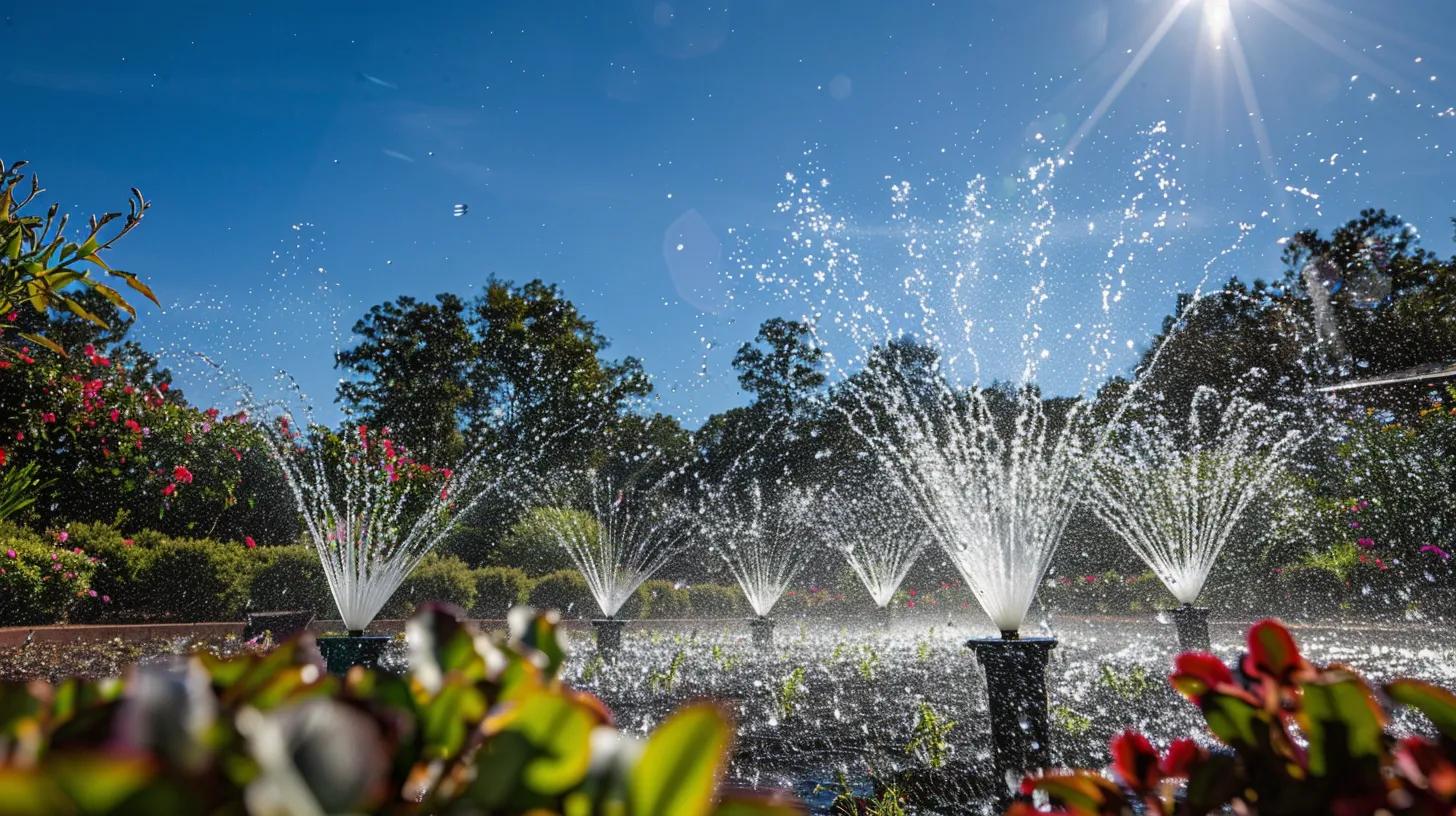
Keeping an Atlanta landscape green through hot summers and unpredictable rainfall can require a surprising amount of water.
Traditional sprinkler schedules often run whether plants need moisture or not, leading to wasted water, higher utility bills, and uneven irrigation. Smart technology offers a more precise way to keep landscapes healthy without unnecessary watering.
Smart irrigation system installation in Atlanta uses automated sprinkler solutions to adjust watering based on factors such as weather, soil conditions, plant needs, and customized schedules.
Features like smart controllers, rain sensors, and targeted irrigation zones can improve coverage while reducing runoff and overwatering.
This guide explores how smart irrigation works, the water-saving benefits it can provide, and what Atlanta property owners should consider when choosing and installing an automated sprinkler system.
Irrigation System Installation Tips for Atlanta Homeowners
What Are Smart Irrigation Systems and How Do They Work in Atlanta?
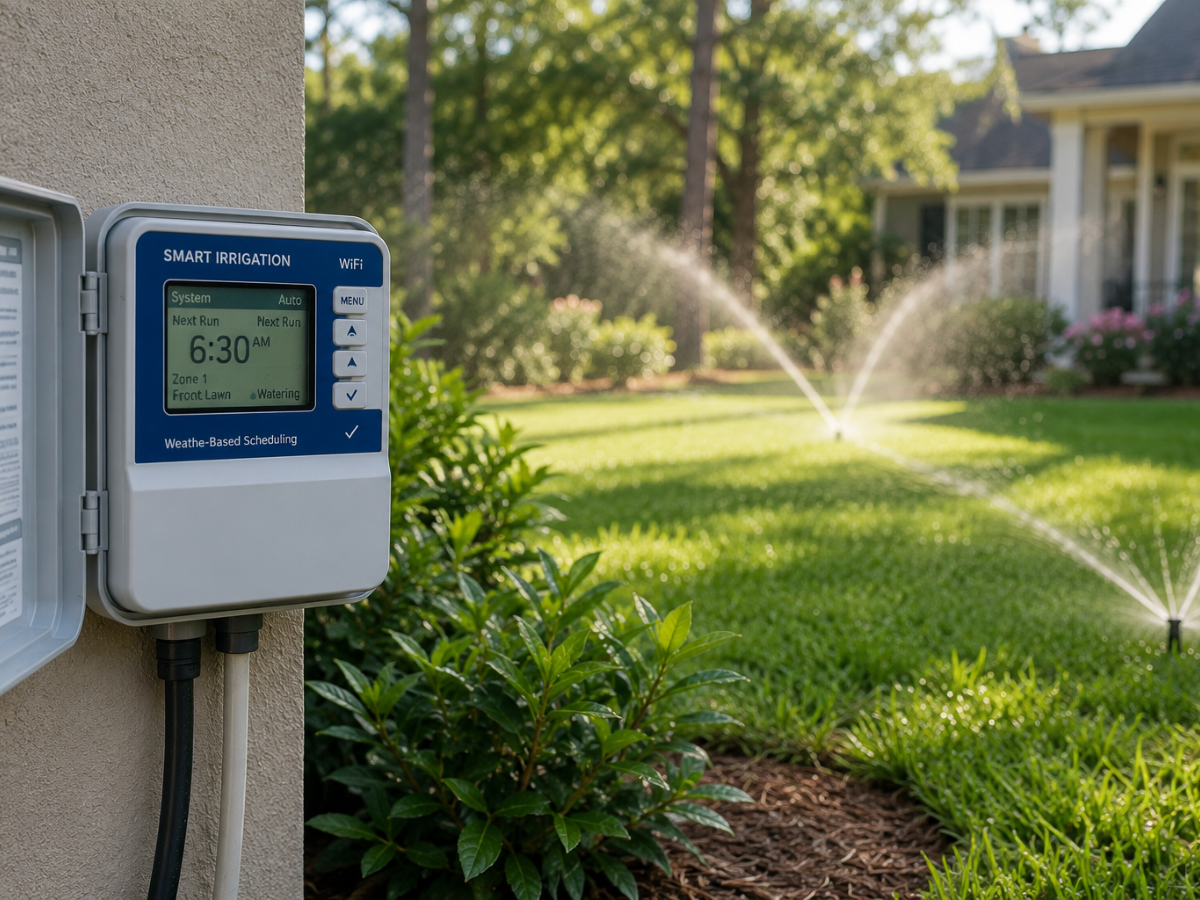
A smart irrigation system takes the basic job of an automatic sprinkler system and makes it more responsive to actual landscape conditions.
Instead of watering the same zones for the same amount of time regardless of weather, a smart controller can adjust irrigation using information such as local weather conditions, rainfall, temperature, and programmed landscape characteristics.
Some systems can also incorporate soil-moisture sensors for direct feedback from the ground.
That flexibility is particularly useful in Atlanta, where landscapes may experience hot summer conditions, periods of heavy rainfall, and changing watering needs throughout the growing season.
A properly designed system can avoid unnecessary watering after rain while providing more appropriate irrigation during hotter, drier periods.
The “smart” technology is only part of the equation, however. An efficient irrigation system still depends on good zone design, properly positioned sprinkler heads or drip lines, suitable water pressure, and programming that reflects what is actually growing in each part of the landscape.
How Does a Smart Irrigation System Know When to Water?
Smart systems generally use one of two approaches, and some installations combine them.
Weather-based controllers use weather information and landscape settings to estimate how much water plants have lost and adjust irrigation accordingly. Depending on the controller, information may come from local weather data, an on-site sensor, or a combination of inputs.
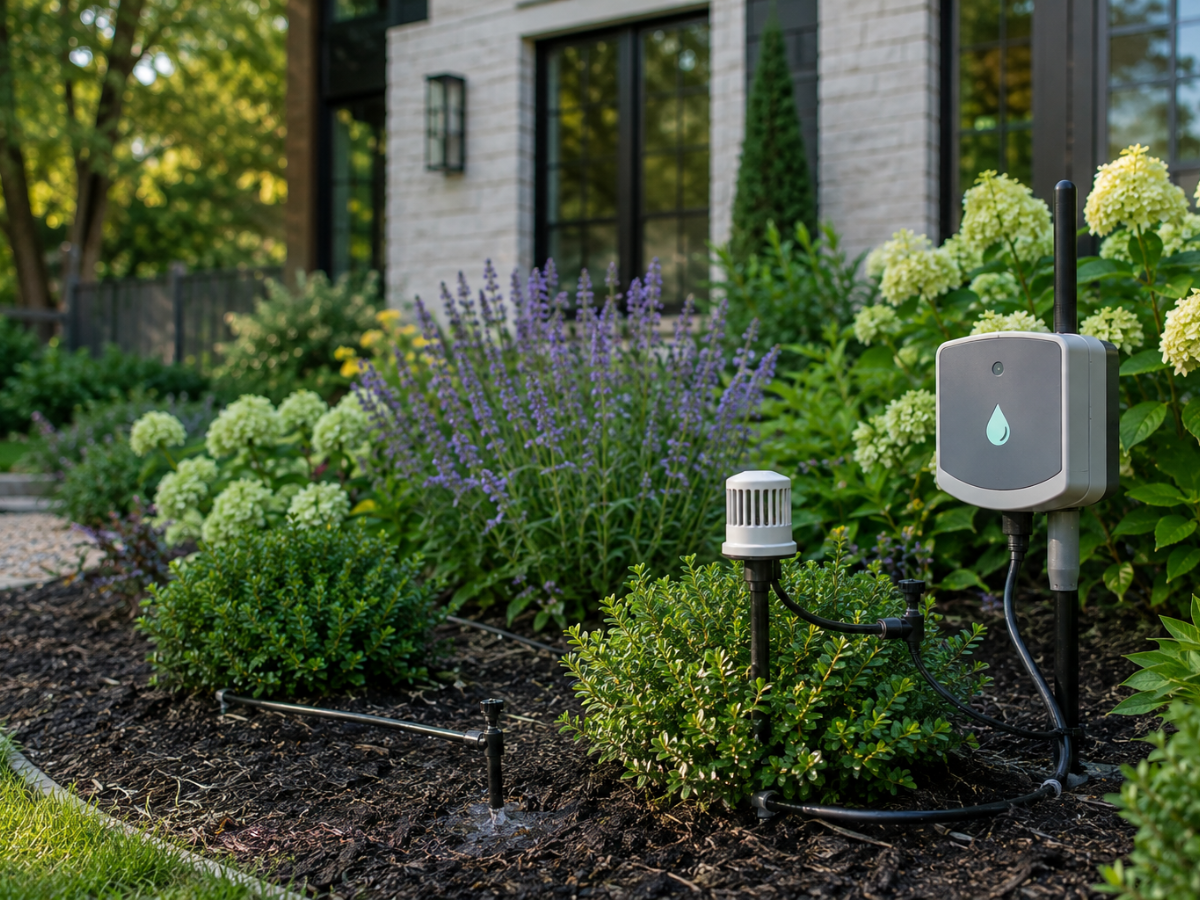
Soil-moisture sensors take a more direct approach by measuring moisture in the soil. When adequate moisture is present, the system can prevent or delay unnecessary irrigation.
Rain sensors provide another useful safeguard. Rather than calculating overall plant water needs, they interrupt scheduled irrigation when sufficient rainfall occurs.
These technologies serve different purposes, which is why choosing the right controls matters more than simply buying the system with the longest feature list.
What Components Make an Irrigation System More Water-Efficient?
A smart controller cannot compensate for poorly selected or malfunctioning irrigation hardware. Water efficiency depends on how the entire system works together.
| Component | What It Does | Why It Matters |
|---|---|---|
| Smart controller | Adjusts irrigation schedules | Reduces reliance on fixed watering times |
| Rain sensor | Interrupts watering after rainfall | Helps prevent unnecessary irrigation |
| Soil-moisture sensor | Measures moisture in the root zone | Helps avoid watering already-moist soil |
| Pressure-regulated equipment | Helps maintain appropriate operating pressure | Can reduce misting and uneven application |
| Drip irrigation | Delivers water close to plant roots | Useful for many beds, shrubs, and targeted planting areas |
| Properly selected sprinkler heads | Distribute water over lawn zones | Helps improve coverage and reduce overspray |
The layout matters just as much as the equipment. Sprinklers watering a lawn, for example, should not necessarily operate on the same schedule as drip irrigation serving established shrubs.
Creating separate hydrozones for plants with similar water needs gives the controller more meaningful control over how much water each area receives.
Why Fixed Sprinkler Schedules Often Waste Water
A conventional timer does exactly what it is programmed to do. If it is set to run three mornings per week, it may continue doing so even when the landscape’s needs change unless someone manually updates the schedule.
That can lead to irrigation immediately before or after rainfall, excessive watering during cooler periods, or insufficient adjustments during seasonal changes.
Smart scheduling makes irrigation more responsive. Weather-based controllers can modify runtimes as conditions change, while rain and soil sensors can help prevent watering when additional moisture is unnecessary.
This does not mean a smart system can simply be installed and forgotten. Seasonal inspections are still needed to identify clogged nozzles, damaged heads, leaks, blocked spray patterns, or landscape changes that affect coverage.
How Do Weather-Based Irrigation Controllers Save Water?
Weather-based irrigation controllers are designed to estimate plant water requirements rather than relying solely on a fixed calendar. They may account for factors such as temperature, rainfall, solar conditions, and evapotranspiration, depending on the controller and data available.
This approach has become established enough that the U.S. Environmental Protection Agency’s WaterSense program has performance criteria for weather-based irrigation controllers. WaterSense-labeled controllers are independently certified to meet EPA requirements for water efficiency and performance.
For homeowners comparing products, this provides a more useful benchmark than marketing terms such as “smart” or “water-saving” alone.
Smartphone Controls Make Adjustments Easier, Not Automatically Smarter
Wi-Fi connectivity is one of the most visible features of modern irrigation systems, but an app by itself does not save water.
What remote access does provide is easier management. Homeowners can review schedules, change settings, temporarily suspend irrigation, or manage individual zones without working directly at the controller.
Some platforms also provide notifications or system information that can make potential problems easier to notice. The real value comes when that convenience is paired with appropriate scheduling, reliable sensors, and a well-designed irrigation layout.
Why Professional System Design Still Matters
Installing smart controls on an inefficient sprinkler layout will not solve problems such as overspray onto pavement, mismatched sprinkler heads, poor pressure, or zones containing plants with very different water requirements.
A professional assessment should consider lawn and planting areas, sun exposure, slopes, soil conditions, available water pressure, plant types, existing irrigation equipment, and drainage. Those details determine where sprinkler heads or drip irrigation should be used and how zones should be organized.
For Atlanta homeowners, the goal should not simply be to automate watering. A well-planned smart irrigation system should apply the appropriate amount of water in the appropriate place while adapting more easily as weather and landscape needs change.
That combination of sound irrigation design and responsive controls is what turns automation into meaningful water management.
Water-Saving Benefits of a Smart Irrigation System
A smart irrigation system can reduce one of the biggest sources of landscape water waste: watering according to a fixed schedule when plants do not actually need it.
Instead of running for the same number of minutes regardless of rainfall, temperature, or soil conditions, smart controls can adjust irrigation in response to changing conditions.
For Atlanta homeowners, that flexibility is especially useful. A landscape may move from hot, relatively dry weather to substantial rainfall within a short period, while lawns, established shrubs, flower beds, and newly planted areas can have very different water requirements.
Smart irrigation makes it easier to respond to those differences without constantly reprogramming a conventional timer.
The potential savings, however, depend heavily on how much water a property was using before the upgrade. A poorly scheduled or overwatering system has much more room for improvement than one that is already managed efficiently.
How Smart Irrigation Reduces Unnecessary Watering
Water savings do not come from a single feature. They result from better decisions about when, where, and how long irrigation should run.
Weather-based controllers can adjust schedules using climatic conditions rather than relying entirely on preset watering days and runtimes. Rain sensors can interrupt irrigation after sufficient rainfall, while soil-moisture sensors can prevent watering when the root zone already contains adequate moisture.
The physical delivery system matters too. Drip irrigation can be useful for planting beds because it applies water close to the root zone rather than spraying a broad area. Properly positioned and maintained sprinkler heads help keep water on the landscape instead of driveways, sidewalks, or other hard surfaces.
Together, these improvements make the entire irrigation system more responsive rather than simply more automated.
How Much Water Can Smart Irrigation Actually Save?
Claims that smart irrigation automatically reduces water use by a specific percentage need context.
A 2020 review of two decades of U.S. smart irrigation controller research found reported savings of roughly 28% to 32% in residential studies when smart controllers were used at properties with opportunities to reduce excess irrigation.
Plot studies reported higher savings, but those results should not be treated as a guarantee for individual homes.
The important distinction is potential savings versus guaranteed savings. A homeowner who routinely overwatered a landscape before installing smart controls may see a meaningful reduction. Someone who already irrigates carefully may see a smaller difference.
Other factors also influence results, including:
| Factor | Why It Affects Water Savings |
|---|---|
| Previous watering habits | Overwatered properties have more room to reduce consumption |
| Controller programming | Incorrect settings can undermine smart features |
| Irrigation-zone design | Plants with different needs should not always share a schedule |
| Sprinkler condition | Leaks, broken heads, and overspray still waste water |
| Soil and drainage | Water infiltration and retention affect appropriate runtimes |
| Plant selection | Established, climate-appropriate plants may require less supplemental irrigation |
This is why smart technology works best as part of a properly designed and maintained irrigation strategy.
Adapting Irrigation to Atlanta’s Changing Weather
Atlanta’s weather makes rigid irrigation schedules particularly limiting. Rainfall can temporarily satisfy much of a landscape’s water demand, while warmer and drier periods may require different scheduling.
A weather-responsive controller can account for changing conditions and reduce or skip scheduled irrigation when appropriate. During periods of greater landscape water demand, it can adjust runtimes according to its programming and available weather data.
Different parts of the yard can also be managed separately. A sunny lawn may lose moisture differently from a shaded planting bed, while established shrubs may have very different irrigation needs from newly installed plants.
Creating irrigation zones around these differences gives smart controls a much better foundation for efficient watering.
Can Smart Irrigation Lower Your Water Bill?
Using less outdoor water can reduce the irrigation-related portion of a household’s water costs, but homeowners should be cautious of promises about a specific dollar amount.
Actual savings depend on local water rates, property size, irrigated area, previous water consumption, seasonal weather, and how effectively the new system is configured. Installation and maintenance costs also need to be considered when evaluating the financial return.
For that reason, a smart irrigation system is better viewed as a long-term water-management improvement than a guaranteed short-term cost saver.
Better Water Management Can Support Healthier Landscaping
More water is not necessarily better for a lawn or garden. Excess irrigation can leave soil unnecessarily saturated, while inadequate watering may prevent plants from receiving the moisture they need.
Smart irrigation provides greater control over that balance. When watering schedules reflect plant needs, weather, soil conditions, and irrigation-zone characteristics, homeowners can support healthy landscapes while avoiding unnecessary water use.
Technology alone cannot accomplish that. Leaking valves, clogged nozzles, poorly aimed sprinkler heads, and inappropriate zone design can waste water regardless of how sophisticated the controller is.
The strongest results come from combining responsive controls with efficient irrigation design, routine inspections, and sensible landscape planning. For Atlanta homeowners, that approach can make outdoor watering more precise, adaptable, and easier to manage throughout the changing seasons.
Smart Irrigation Technologies for Atlanta Landscapes
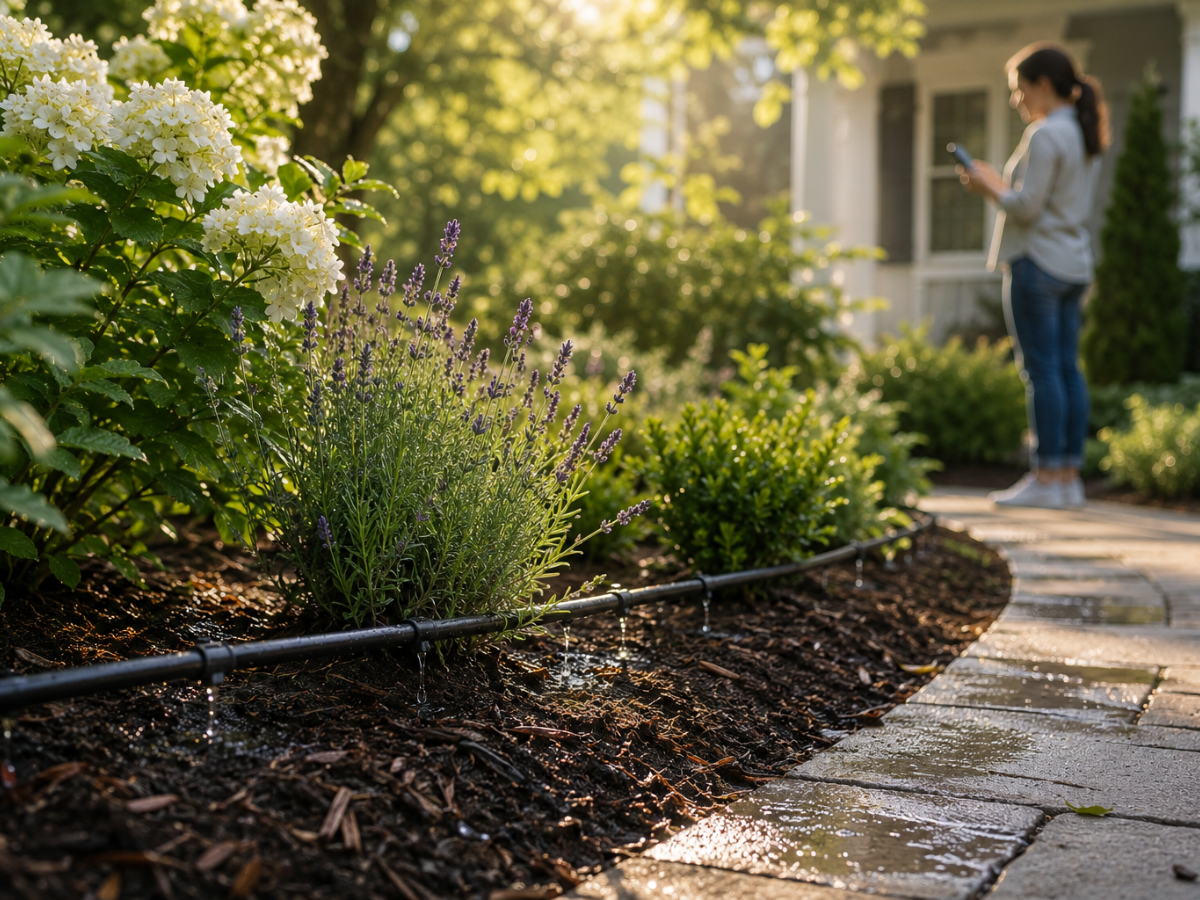
A smart irrigation system can include anything from a conventional sprinkler setup with a rain sensor to a connected controller that automatically adjusts watering based on weather and landscape conditions.
The right technology for an Atlanta property depends less on choosing the most advanced equipment and more on matching each component to the plants, irrigation zones, soil, sun exposure, and existing system.
In many cases, the most effective setup combines several technologies. Drip irrigation may handle planting beds, sprinklers can cover turf, sensors can prevent unnecessary watering, and a smart controller can coordinate the entire system.
How Drip Irrigation, Rain Sensors, and Smart Controllers Compare
These technologies solve different irrigation problems, so they should not necessarily be viewed as competing options.
| Technology | What It Does | Best Suited For |
|---|---|---|
| Drip irrigation | Applies water slowly near the root zone | Shrubs, flower beds, foundation plantings, and other targeted areas |
| Rain sensor | Interrupts scheduled irrigation after sufficient rainfall | Existing sprinkler systems that need basic rain shutoff |
| Soil-moisture sensor | Measures moisture in the soil to help determine whether watering is needed | Landscapes where actual soil conditions are useful for scheduling |
| Weather-based controller | Adjusts irrigation using weather or evapotranspiration data | Multi-zone landscapes with changing seasonal water needs |
| Smart controller with app access | Adds scheduling, alerts, monitoring, and remote management | Homeowners who want greater visibility and control |
A property does not need every technology listed above. The goal is to identify where water is being used inefficiently and select equipment that addresses those specific problems.
When Drip Irrigation Makes More Sense Than Sprinklers
Drip irrigation works particularly well where water needs to be delivered to defined planting areas rather than broadcast across a large surface.
Instead of spraying water into the air, drip lines and emitters apply it closer to the soil and root zone. That makes drip irrigation useful around shrubs, perennial beds, vegetable gardens, and other concentrated plantings.
It can also reduce water reaching sidewalks, driveways, and areas where irrigation provides no benefit.
Turf presents a different challenge. Lawns typically require more uniform coverage across a broad area, which may make properly designed spray heads or rotary sprinklers more practical.
A well-designed irrigation system can therefore use different delivery methods in different zones rather than expecting one type of equipment to handle the entire landscape.
What Rain and Soil-Moisture Sensors Actually Do
Rain sensors provide a relatively straightforward upgrade. When sufficient rainfall occurs, the sensor signals the controller to interrupt scheduled watering. This helps prevent the familiar sight of sprinklers running during or shortly after a storm.
Soil-moisture sensors approach the problem differently. Instead of responding to rainfall itself, they measure conditions in the soil. Depending on the system, that information can be used to prevent irrigation when adequate moisture is already available.
Placement matters with soil sensors. A sensor installed in an unusually wet, dry, sunny, or shaded location may not accurately represent conditions across an entire irrigation zone. Proper zoning and installation are therefore just as important as the technology.
How Weather-Based Smart Controllers Improve Scheduling
Traditional irrigation timers generally follow the schedule programmed into them until someone changes it. Smart controllers can make scheduling more responsive.
Weather-based models may use information such as temperature, rainfall, solar radiation, humidity, or evapotranspiration estimates to calculate changing landscape water needs. Rather than watering for exactly the same duration throughout the season, the controller can modify schedules as conditions change.
For Atlanta landscapes, this can be particularly useful during transitions between wetter periods and stretches of hotter, drier weather.
Homeowners shopping for a controller can also look for models carrying the EPA WaterSense label. WaterSense-labeled weather-based irrigation controllers must meet EPA criteria for water efficiency and performance.
Do You Need AI and Internet-Connected Irrigation?
Not necessarily. Terms such as “AI” and “IoT” can make irrigation technology sound more complicated than it needs to be.
Connected irrigation systems can provide genuinely useful features, including remote schedule changes, weather-based adjustments, system notifications, watering history, and alerts that may help identify unusual operation.
Some newer platforms also use algorithms to automate scheduling decisions based on incoming data.
Those capabilities are most valuable when they solve a practical management problem. A smaller residential property may work perfectly well with a quality controller and rain sensor, while a larger landscape with numerous irrigation zones may benefit from more sophisticated monitoring and automation.
The smartest irrigation system is ultimately the one that applies the right amount of water to the right place at the right time. For Atlanta homeowners, good zoning, appropriate sprinkler or drip selection, responsive controls, and regular maintenance are often more important than having the longest list of connected features.
Smart Irrigation System Installation in Atlanta: What to Expect
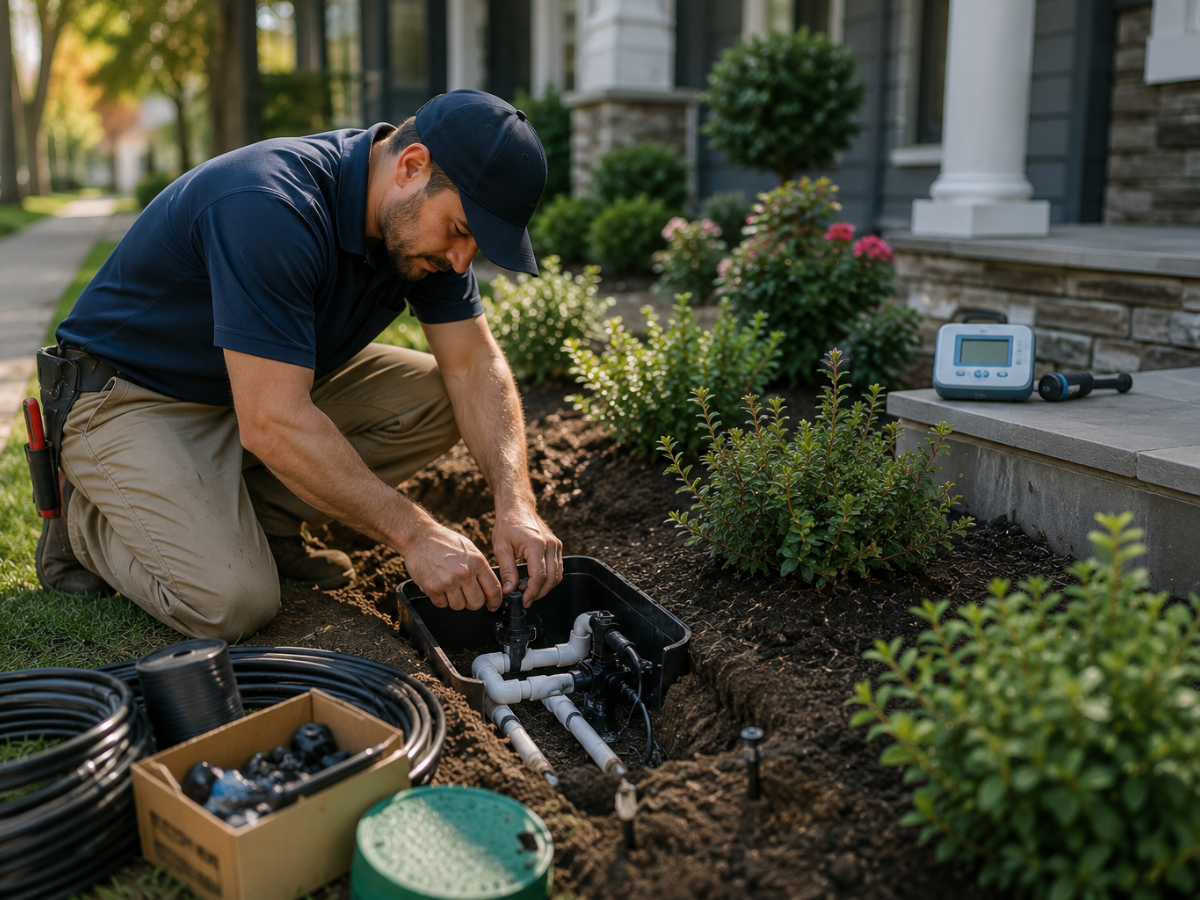
Installing a smart irrigation system involves more than replacing a conventional timer with a Wi-Fi controller.
For the system to water efficiently, the entire landscape needs to be considered, including plant types, sun exposure, soil conditions, slopes, existing sprinkler coverage, water pressure, and the way different areas of the property use water.
For Atlanta homeowners, professional installation typically begins with an evaluation of the property and any existing irrigation equipment. From there, the installer can determine what should be retained, repaired, upgraded, or redesigned.
Some properties may only need a controller and sensor upgrade, while others benefit from new zones, drip lines, sprinkler heads, valves, or piping.
Start With an Irrigation and Landscape Assessment
Before equipment is selected, the installer should understand how water moves through the property and where it is actually needed.
An assessment may include checking the existing controller, valves, sprinkler heads, water pressure, coverage patterns, drainage, and visible leaks.
The landscape itself should also be reviewed. Turf, established shrubs, flower beds, and newly planted areas often have different watering requirements and may need to be separated into individual irrigation zones.
If an existing irrigation system is still in good condition, upgrading may be more practical than replacing everything. A compatible smart controller, rain sensor, soil-moisture sensor, or more efficient sprinkler heads can sometimes modernize the system without extensive excavation.
Design Irrigation Zones Around the Landscape
Good zoning is one of the most important parts of an efficient installation.
Rather than watering the entire property according to a single schedule, irrigation zones allow areas with similar needs to operate together. A sunny lawn, for example, should not necessarily receive the same amount of water as a shaded bed of established shrubs.
During the design stage, the installer can determine which type of water delivery works best in each location. Spray or rotary sprinklers may be appropriate for turf, while drip irrigation can provide more targeted watering for beds and other concentrated plantings.
The design should also account for sprinkler placement and coverage. Poorly positioned heads can leave dry spots in one area while repeatedly soaking another.
Install the Controller, Sensors, Valves, and Watering Components
Once the plan is established, installation can begin. The amount of disruption depends heavily on whether the project is a retrofit or a completely new irrigation system.
A typical project may involve:
- Installing or replacing the irrigation controller.
- Connecting compatible rain, weather, or soil-moisture sensors.
- Repairing or installing valves and underground irrigation lines.
- Positioning sprinkler heads or drip lines according to the zone design.
- Connecting smart controls to the property’s Wi-Fi network when required.
- Programming initial schedules for each irrigation zone.
For new systems, trenching may be necessary to install underground piping. An upgrade to an existing system can be considerably less invasive if the pipes, valves, wiring, and sprinkler layout remain usable.
Test Coverage Before Programming the Final Schedule
Installation is not complete when the equipment turns on. Each zone should be tested under actual operating conditions.
The installer should check for leaks, clogged or damaged heads, overspray, poor coverage, incorrect sprinkler alignment, valve problems, and pressure issues. Drip emitters should also be inspected to confirm that water is reaching the intended planting areas.
Testing is particularly important because smart controls cannot compensate for faulty hardware. A sophisticated controller will not prevent water waste if a sprinkler head is broken or aimed at the driveway.
Once the physical system is operating correctly, schedules can be programmed around the needs of individual zones.
Set Up Smart Features and Learn the Controls
One advantage of a connected irrigation system is that homeowners can have more visibility into how and when their landscape is watered.
Depending on the controller, setup may include connecting an app, establishing weather-based adjustments, creating zone names, configuring notifications, and setting seasonal watering parameters.
The installer should explain how to make basic changes, manually run a zone, pause irrigation, review schedules, and respond to alerts. Homeowners should also understand which adjustments the controller makes automatically and which still require manual input.
Plan for Adjustments After Installation
A new irrigation system should not be treated as a set-it-and-forget-it feature. Landscapes change throughout the year, and newly planted areas may require different watering than established plants.
After installation, watch for persistently wet or dry areas, runoff, overspray, and plants that appear to be receiving too much or too little water. Seasonal schedule adjustments and routine inspections can keep the system operating efficiently.
For Atlanta properties, a successful smart sprinkler installation ultimately depends on three things working together: thoughtful landscape zoning, properly installed irrigation hardware, and smart controls configured for the property.
When those pieces are coordinated, automation becomes much more useful than simply putting an old watering schedule on a smartphone.
Smart Irrigation System Maintenance and Troubleshooting
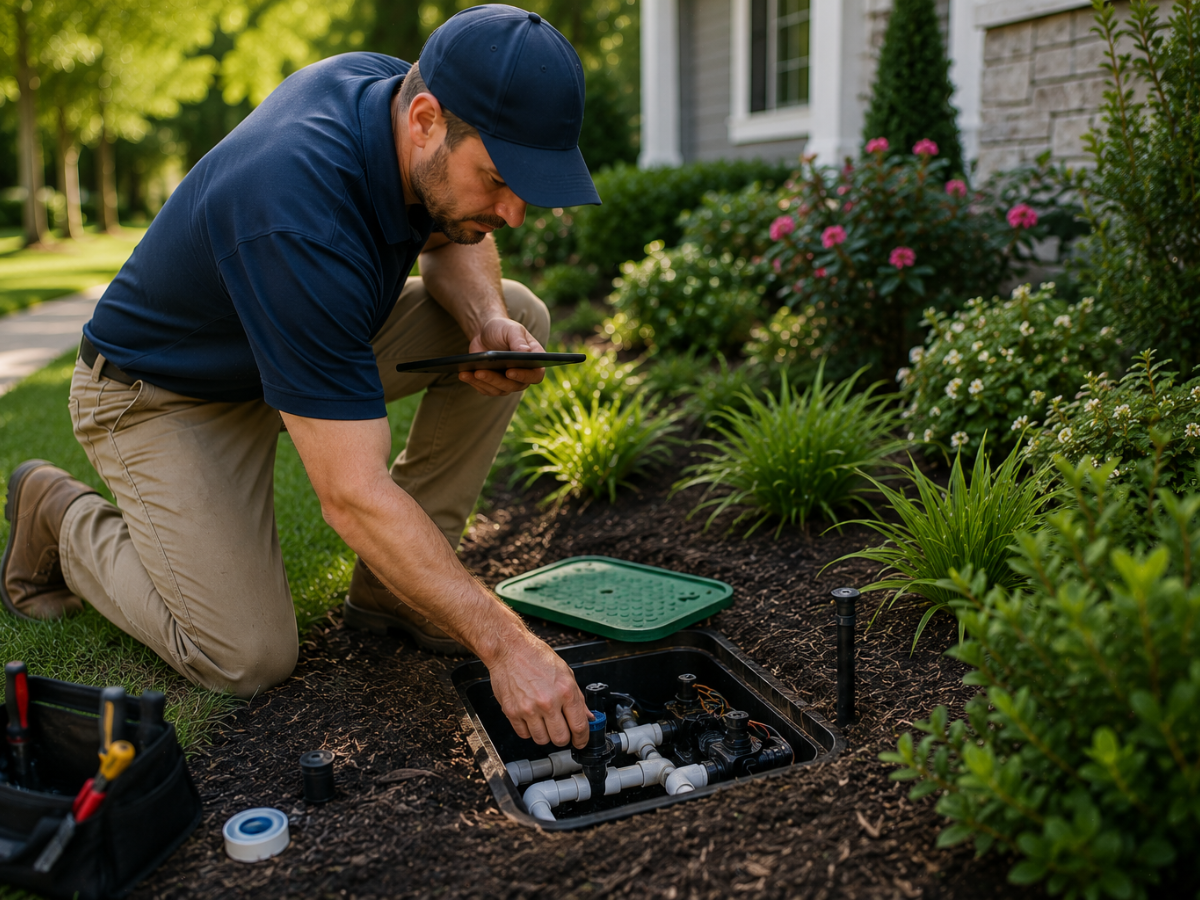
A smart irrigation system may automate watering decisions, but it still relies on pipes, valves, sprinkler heads, sensors, wiring, and software that need occasional attention. Small problems such as a clogged nozzle or misaligned sprinkler can quietly waste water even when the controller itself is working perfectly.
For Atlanta homeowners, maintenance should also account for seasonal changes. Heavy rain, summer heat, landscape growth, mowing, and yard work can all affect how well irrigation equipment performs.
A few routine checks throughout the year can catch problems before they lead to dry areas, excessive watering, or unexpectedly high water use.
Inspect Each Irrigation Zone While It Is Running
One of the simplest maintenance tasks is also one of the most useful: periodically run each zone manually and walk through the property while it operates.
Watching the system in action makes it easier to spot issues that may not be obvious from the controller or mobile app. Look for sprinkler heads that fail to rise, uneven spray patterns, water hitting pavement, bubbling around underground components, or areas receiving noticeably more or less water than their surroundings.
Pay particular attention to:
- Broken, tilted, or buried sprinkler heads
- Clogged nozzles and drip emitters
- Water spraying onto sidewalks, driveways, or structures
- Unusually wet areas that could indicate a leak
- Dry patches that suggest poor coverage
- Drip lines that have shifted or become disconnected
Landscape growth can also change coverage over time. A sprinkler that worked correctly when installed may eventually become blocked by shrubs, groundcover, or other vegetation.
Adjust Watering as Conditions Change
Smart controllers can automate many schedule adjustments, particularly when they use weather or soil-moisture data. That does not mean the original settings should be forgotten indefinitely.
Review individual zones as plants mature and seasons change. Newly installed plants, established shrubs, turf, and shaded areas may require different watering strategies. If a landscape has changed significantly since the irrigation system was programmed, its zones and runtimes may need to change as well.
Check that weather-based settings, rain delays, and seasonal adjustments are functioning as expected. If the system continues watering immediately after substantial rainfall, investigate the controller settings and any connected rain or moisture sensors.
Troubleshoot Uneven or Weak Sprinkler Coverage
Poor coverage does not always mean the irrigation schedule needs to run longer. Increasing runtime can actually make the problem worse by overwatering areas that are already receiving enough moisture.
Start by identifying the physical cause.
| Problem | Possible Cause | What to Check |
|---|---|---|
| One sprinkler has weak flow | Clogged nozzle or damaged head | Clean the nozzle and inspect the sprinkler |
| Several heads have low pressure | Leak, valve issue, or pressure problem | Check the affected zone and visible piping |
| One area stays dry | Misaligned or obstructed sprinkler | Inspect coverage and nearby vegetation |
| Water pools around a head | Damaged fitting, leak, or drainage issue | Inspect the head and surrounding connection |
| Drip zone waters unevenly | Clogged or damaged emitter | Check emitters, filters, and drip lines |
Correcting the underlying problem is usually more effective than compensating with additional watering time.
Check Smart Controllers, Sensors, and Connectivity
When the hardware appears to be working but watering behavior seems wrong, turn your attention to the smart components.
Confirm that the controller has power, the correct date and time, and an active network connection if it relies on online weather information. Review zone settings to make sure plant types, sprinkler types, or other configuration details have not been changed accidentally.
Sensors should also be inspected periodically. A rain sensor that is obstructed or damaged may fail to interrupt irrigation when expected. Soil-moisture sensors can produce less useful information if their placement no longer represents the conditions within the zone.
Software and app notifications can help identify certain problems, but they should complement physical inspections rather than replace them.
Watch for Signs of an Irrigation Leak
Not every irrigation leak produces an obvious spray of water. Underground problems may first appear as persistently soggy soil, erosion, unusually vigorous growth in one small area, low sprinkler pressure, or water collecting when the system operates.
An unexplained increase in water consumption can also justify inspecting the irrigation system, although higher usage can have other causes.
Small accessible problems, such as cleaning a clogged nozzle, may be straightforward for homeowners to address. Underground pipe leaks, valve failures, wiring problems, and persistent pressure issues are generally better evaluated by an irrigation professional.
Make Maintenance Part of Seasonal Landscape Care
Smart irrigation works best when the physical system receives the same attention as the technology controlling it. Inspecting sprinkler coverage, clearing blocked components, checking sensors, reviewing schedules, and repairing leaks helps preserve the water-saving benefits the system was designed to provide.
For Atlanta landscapes, a useful habit is to review the irrigation system when seasonal watering needs change rather than waiting until plants show stress or a water bill reveals a problem.
Smart controls can make irrigation more responsive, but routine maintenance is what keeps that intelligence connected to a system that actually delivers water where it belongs.
Atlanta Watering Rules, Incentives, and Smart Irrigation Costs
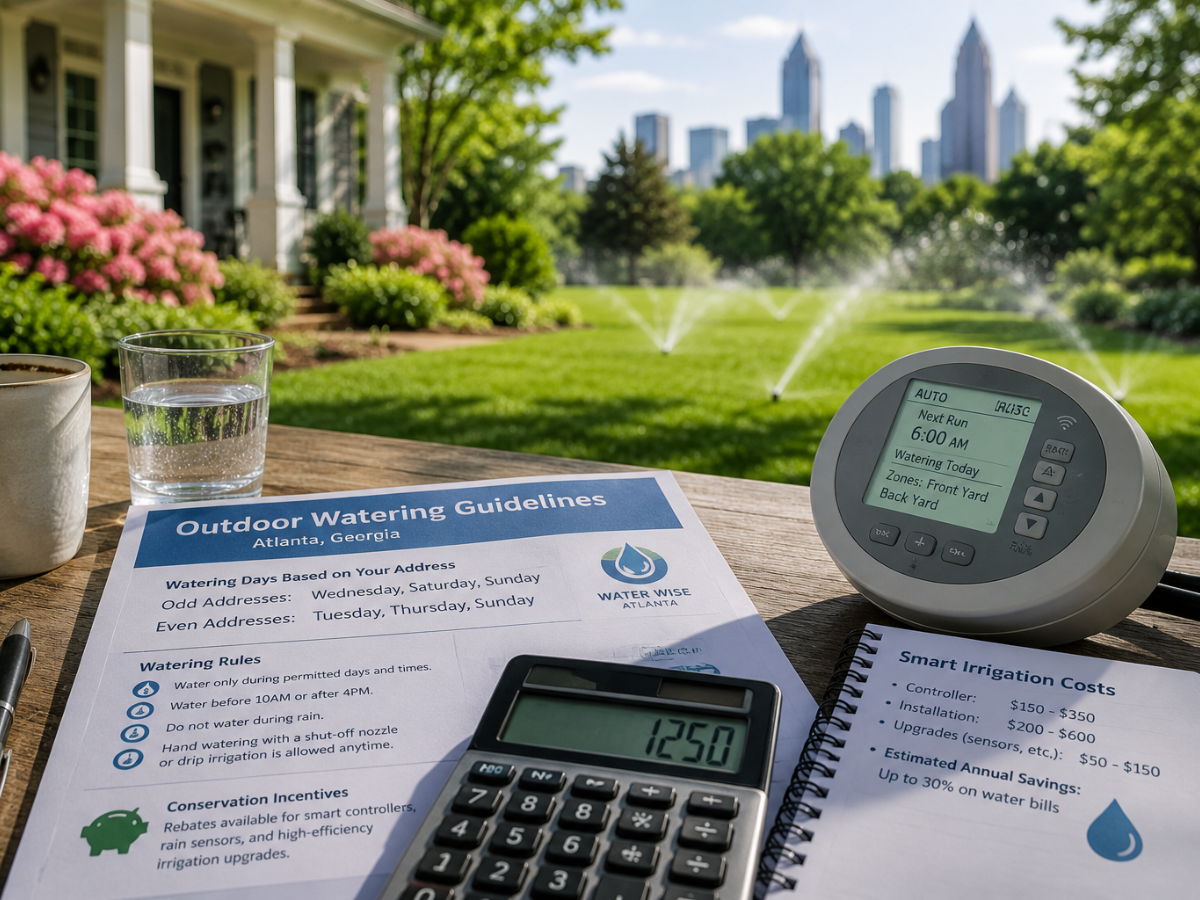
Before installing or upgrading an irrigation system in Atlanta, it is worth looking beyond controllers, sensors, and sprinkler heads.
Outdoor watering rules can affect when irrigation is permitted, while local programs may offer conservation resources or incentives. Installation costs also vary considerably depending on whether you are modernizing an existing system or starting from scratch.
Because regulations, water rates, and incentive programs can change, homeowners should verify current requirements with their water provider and local authorities before planning a project.
How Georgia’s Outdoor Watering Rules Affect Irrigation
Georgia regulates outdoor water use statewide, so homeowners should understand the rules that apply to landscape irrigation rather than assuming an automated system can run whenever it is programmed.
Under Georgia’s Water Stewardship Act, general landscape watering is permitted during designated hours, while certain activities and circumstances may be treated differently. Drought conditions can also lead to additional restrictions.
This has an important implication for smart irrigation: automation does not override local watering requirements. Controllers should be programmed so that watering schedules comply with current rules as well as the actual needs of the landscape.
Homeowners should also check whether their property is subject to additional requirements from their local water provider, municipality, homeowners association, or other authority.
Check Current Rebates Before Choosing Equipment
The original version of this section overstates the availability of rebates, tax incentives, and grants. These programs should not be presented as guaranteed benefits because eligibility and availability can change.
Instead, homeowners considering a water-efficient irrigation system should check current programs offered by the City of Atlanta Department of Watershed Management, their specific water utility, and relevant state or regional conservation programs.
When incentives are available, eligibility may depend on factors such as:
- The type of irrigation equipment being installed
- Whether a controller or product meets specified efficiency standards
- The property’s location and water provider
- Whether preapproval is required
- Whether installation must be completed before a particular deadline
- Available program funding
It is also worth checking for EPA WaterSense requirements. Some conservation programs specifically favor WaterSense-labeled products because they have been independently certified to meet EPA criteria for water efficiency and performance.
Never purchase equipment solely because you expect a rebate. Confirm the program, eligibility requirements, application process, and qualifying products first.
What Does a Smart Irrigation System Cost in Atlanta?
There is no single reliable price for smart sprinkler installation because the scope of the project can vary dramatically. Quoting a blanket $2,000 to $5,000 range without defining the property or installation requirements could mislead homeowners.
A simple controller upgrade on a functioning sprinkler system is fundamentally different from designing and installing a new multi-zone system with underground piping, valves, drip irrigation, sensors, and landscaping restoration.
Several factors influence the final cost:
| Cost Factor | Why It Matters |
|---|---|
| Existing system condition | Reusing functional pipes, valves, and wiring can reduce the scope of work |
| Property size | Larger irrigated areas typically require more equipment and labor |
| Number of zones | More zones can mean additional valves, wiring, and programming |
| Controller and sensors | Equipment ranges from basic smart controls to more advanced monitoring systems |
| Drip or sprinkler installation | Different watering methods require different components and labor |
| Trenching and accessibility | Difficult excavation or obstacles can increase installation time |
| Repairs and modifications | Leaks, damaged valves, poor coverage, or outdated equipment may need correction |
| Landscape complexity | Slopes, separate planting areas, hardscaping, and varied plant needs can complicate design |
For homeowners with an existing system, asking for separate pricing for necessary repairs and optional smart upgrades can make estimates easier to compare.
Upgrade or Replace: Which Makes More Financial Sense?
A complete replacement is not always necessary.
If the existing irrigation lines, valves, wiring, and sprinkler layout are functioning well, homeowners may be able to add a smart controller, compatible sensors, or more efficient watering components while retaining much of the original infrastructure.
Replacement becomes more reasonable when the existing system has recurring leaks, inadequate coverage, deteriorated components, poor zoning, or a layout that no longer matches the landscape.
Before deciding, ask an irrigation professional to evaluate both options. The cheapest initial proposal is not necessarily the lowest-cost solution over time if it leaves major coverage or maintenance problems unresolved.
Consider Operating Costs Alongside Installation Price
Upfront price is only part of the financial picture. A well-designed irrigation system should also be evaluated based on ongoing water use, maintenance requirements, repair accessibility, and how easily schedules can be adjusted as the landscape changes.
Smart technology has the greatest financial value when it corrects inefficient watering rather than simply adding connected features to an already efficient system.
For Atlanta homeowners, the best approach is to verify current watering rules and incentives first, have the property assessed, and then compare installation options based on the actual landscape.
That provides a much more useful picture of cost than relying on a generic price range or assuming rebates will automatically offset the investment.
Choosing a Smart Irrigation Installation Company in Atlanta
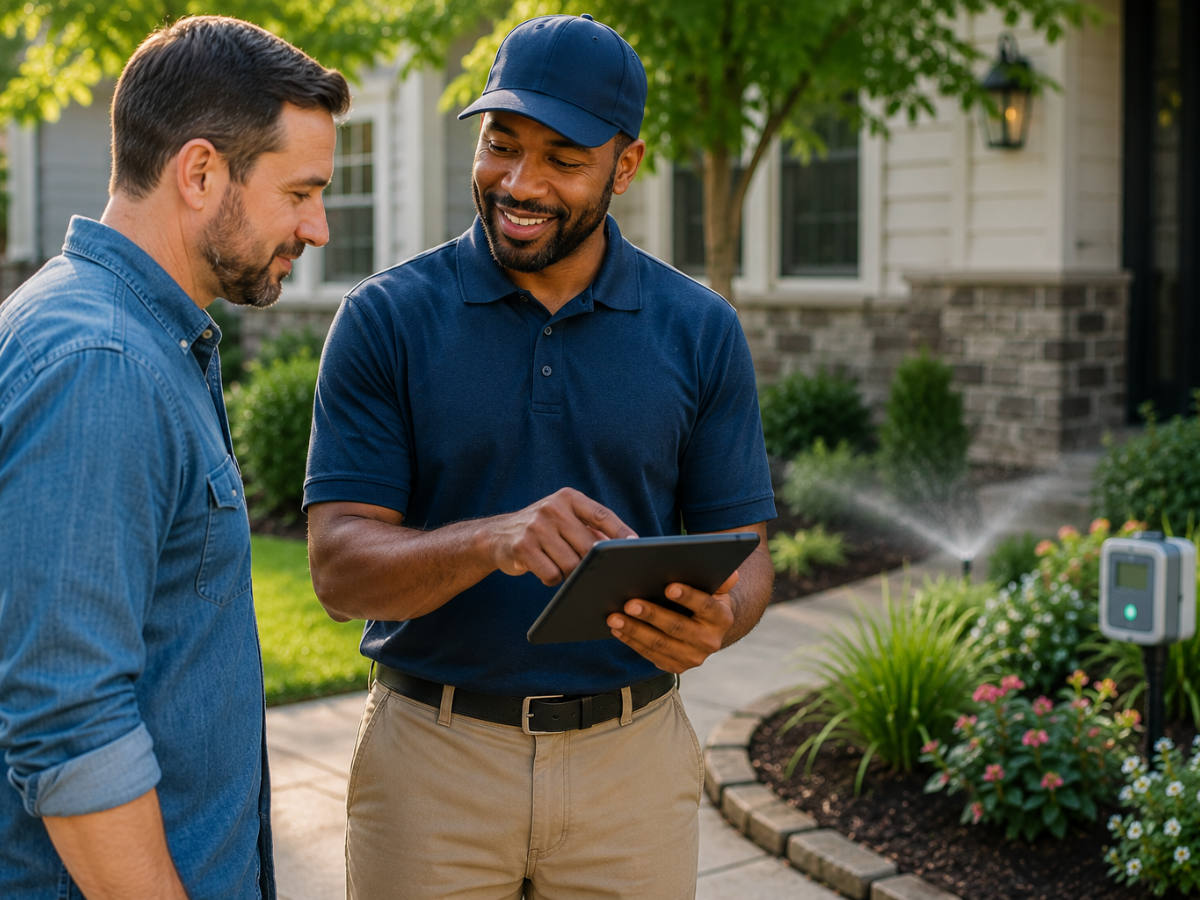
A smart controller or soil sensor can only do so much if the irrigation system itself is poorly designed. Uneven sprinkler coverage, incorrect zoning, leaks, excessive pressure, or badly positioned heads can continue wasting water regardless of how sophisticated the controller is.
For that reason, choosing an installer should involve more than comparing prices or looking at star ratings.
The right Atlanta irrigation company should understand both traditional irrigation design and the technology behind modern automated systems. More importantly, the contractor should be willing to evaluate the property before recommending equipment.
Look for Experience With Smart Irrigation Systems
Not every landscaping company specializes in irrigation, and not every irrigation contractor has extensive experience with smart technology. Ask specifically about the types of controllers, weather sensors, soil-moisture sensors, drip systems, and connected equipment the company regularly installs and services.
A knowledgeable contractor should also be able to explain why a particular product or configuration makes sense for your property. Be cautious if the recommendation is based primarily on brand preference rather than your landscape.
Useful questions to ask include:
- Does the company install and service the equipment it recommends?
- Can technicians integrate smart controls with an existing irrigation system?
- Will they inspect current zones, valves, sprinkler heads, and water pressure before proposing upgrades?
- Can they explain how the system will be programmed for different areas of the landscape?
- What support is available if the controller, sensors, or app stop working properly?
These questions reveal much more about a contractor’s expertise than simply asking whether the company offers “smart irrigation.”
Expect a Property Assessment Before Receiving a Proposal
A quality estimate should account for the landscape itself.
Lawns, flower beds, shrubs, trees, slopes, shaded areas, and sunny sections can have very different watering requirements. Soil conditions, drainage, water pressure, existing plumbing, and the location of hardscaping can also affect system design.
If an existing irrigation system is already installed, the contractor should determine what can reasonably be reused. In some cases, adding a smart controller or upgrading individual components may be more practical than replacing the entire system.
After the assessment, the proposal should clearly distinguish between necessary repairs, efficiency improvements, smart technology upgrades, and optional additions. That makes it easier to understand where your money is going and compare competing bids fairly.
Compare Irrigation Contractors on More Than Price
The lowest estimate can be appealing, but it does not necessarily represent the best value. Compare what each contractor actually includes in the quoted price.
| What to Compare | What to Look For |
|---|---|
| System design | Zones and watering methods matched to the landscape |
| Equipment | Specific controllers, sensors, valves, heads, and other components |
| Installation | Labor, wiring, trenching, setup, and landscape restoration |
| Programming | Initial schedules and configuration of smart features |
| Warranty | Coverage for equipment and installation workmanship |
| Homeowner training | Instructions for using the controller or mobile app |
| Service | Availability of repairs, seasonal adjustments, and troubleshooting |
Getting an itemized proposal also reduces the chance of comparing two estimates that cover very different scopes of work.
Verify Credentials, Insurance, and Warranty Coverage
Before hiring a company, verify any licenses or credentials required for the specific work being performed and confirm that the contractor carries appropriate insurance. Requirements can depend on the scope of the project, particularly when work extends beyond basic landscaping.
Ask about warranties as well. Equipment may carry a manufacturer’s warranty, while the installer may provide separate coverage for labor or workmanship. Find out who handles a warranty claim if a component fails and whether service charges apply.
Those details are much easier to clarify before installation than after a problem develops.
Use Customer Reviews to Identify Patterns, Not Just Ratings
Online reviews are useful, but the overall star rating tells only part of the story. Read recent reviews and look for recurring comments about communication, punctuality, installation quality, cleanup, troubleshooting, and follow-up service.
Pay particular attention to reviews describing projects similar to yours. Feedback about routine lawn maintenance may tell you very little about a company’s ability to design and install a multi-zone smart irrigation system.
Negative reviews can be informative too. An occasional complaint is not necessarily a reason to rule out a contractor, but repeated problems involving leaks, unfinished work, poor communication, or difficulty obtaining warranty service deserve closer attention.
Choose a Company That Supports the System After Installation
Smart irrigation is not necessarily a “set it and forget it” upgrade. Landscapes change, plants mature, seasons shift, sprinkler heads become damaged, and controller settings may need refinement.
Before choosing an Atlanta irrigation company, ask what happens after installation. A contractor that can explain the system, help establish appropriate watering zones and schedules, and provide future maintenance gives homeowners a clearer path for keeping the equipment useful over time.
Ultimately, the best installer is not simply the company selling the most advanced controller. It is the one that can design an irrigation system around the property, install compatible equipment correctly, explain how it works, and provide reliable support when adjustments or repairs are needed.
Frequently Asked Questions About Smart Irrigation Systems
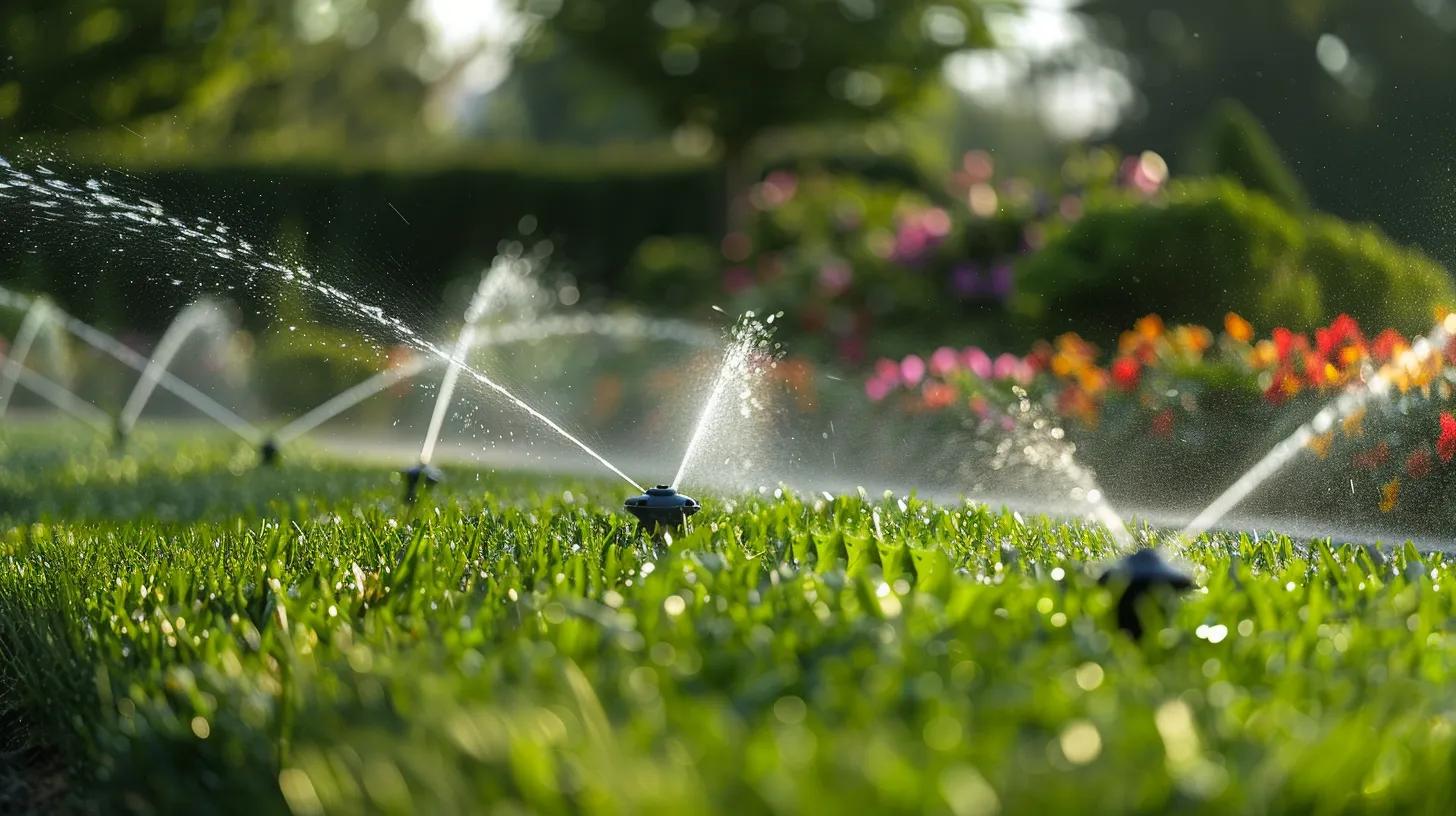
Smart irrigation technology can make landscape watering easier to manage, but homeowners often have practical questions about compatibility, installation, maintenance, and day-to-day operation.
The answers below cover some of the most common considerations when deciding whether a smart irrigation system is right for your property.
Can Smart Irrigation Systems Be Controlled Remotely?
Yes. Many smart irrigation controllers connect to Wi-Fi and can be managed through a mobile app. Depending on the model, homeowners may be able to start or stop watering, change schedules, review watering activity, receive system alerts, and manage individual zones without accessing the controller directly.
Remote access is especially useful when weather changes unexpectedly or you notice a watering problem while away from home. However, available features vary by manufacturer, so check exactly what the controller and app support before purchasing.
Can I Add Smart Controls to My Existing Irrigation System?
Often, yes. An existing sprinkler system may not need to be completely replaced to gain smart functionality. In many cases, a conventional controller can be replaced with a compatible smart controller while existing valves, pipes, and sprinkler heads remain in place.
The condition of the current irrigation system matters. Leaks, damaged valves, poor sprinkler coverage, or incorrectly designed zones should be addressed rather than relying on a new controller to compensate for them. A system inspection can help determine whether upgrading or replacing individual components makes more sense.
How Does a Smart Irrigation System Know When to Water?
The exact method depends on the equipment. Weather-based controllers can use information such as temperature, rainfall, and other local weather data to modify watering schedules. Systems equipped with soil-moisture sensors can respond to conditions in the ground instead of watering solely according to a preset timer.
Some systems combine multiple sources of information. The goal is to make watering more responsive to actual landscape conditions rather than running the same schedule regardless of weather.
Will a Smart Irrigation System Stop Watering When It Rains?
Many systems can delay or suspend watering when rainfall makes irrigation unnecessary. This may be accomplished through a physical rain sensor, weather-based controller, connected weather data, or a combination of technologies.
It is still important to configure the system correctly. A smart controller cannot prevent every instance of unnecessary watering if sensors are poorly positioned or settings do not match the property.
Do Different Areas of My Yard Need Separate Watering Zones?
Usually, landscapes perform better when areas with substantially different watering requirements are separated into appropriate zones. A sunny lawn, shaded planting bed, vegetable garden, and established shrubs may not need the same amount or type of irrigation.
Good zoning allows the controller to adjust watering by area instead of treating the entire property as though every plant has identical needs. This is one reason system design remains important even when using advanced automation.
Can Smart Irrigation Work With Drip Irrigation?
Yes. Smart controllers can be used with many drip irrigation setups, provided the components are compatible and the system is designed correctly.
Drip irrigation is particularly useful for planting beds, shrubs, and other applications where water needs to be delivered directly to a defined root area. Combining appropriate drip components with automated scheduling can provide more targeted watering than using spray heads everywhere in the landscape.
Does Smart Irrigation Still Require Seasonal Adjustments?
Yes. Automation reduces the amount of manual scheduling required, but it does not eliminate maintenance or oversight.
Plant requirements change throughout the year, and landscapes themselves evolve as plants mature or new areas are added. Periodically reviewing schedules, zones, sensors, and watering results helps ensure the irrigation system continues to match actual conditions.
What Happens if the Wi-Fi Connection Goes Down?
This depends on the controller. Many smart controllers can continue operating according to a locally stored watering schedule when internet connectivity is temporarily unavailable, although remote controls, weather updates, notifications, or other connected features may be limited until service returns.
Because capabilities vary, homeowners should confirm how a particular controller behaves during internet or power interruptions before installation.
How Often Should a Smart Irrigation System Be Inspected?
There is no single inspection schedule that suits every property, but the system should be checked periodically and whenever you notice unusual watering patterns.
Look for clogged or damaged sprinkler heads, leaking valves or pipes, blocked drip emitters, incorrect spray direction, unusually wet or dry areas, and sensors that are no longer responding properly.
Checking the system when seasonal watering needs change is also a good opportunity to catch problems before they waste significant amounts of water.
Is a Smart Irrigation System Worth Installing?
It can be, particularly for homeowners who currently rely on fixed watering schedules or want more control over a larger landscape. The potential value depends on the condition of the existing system, landscape design, local climate, watering habits, and the features of the equipment being considered.
Smart technology is most effective when paired with good irrigation fundamentals. Proper zoning, appropriate sprinkler or drip components, correct water pressure, healthy equipment, and thoughtful programming still matter.
Do I Need Professional Installation for a Smart Irrigation System?
Some controller replacements can be relatively straightforward, particularly when an existing system is already functioning correctly. More complex projects may benefit from professional installation.
If the project involves new zones, valves, underground piping, electrical connections, pressure issues, extensive troubleshooting, or redesigning an existing system, professional assessment can help identify problems that would otherwise remain after the smart controller is installed.
Ultimately, a smart irrigation system should do more than add app controls to your sprinklers.
When the equipment, landscape design, and watering strategy work together, smart irrigation can provide more responsive control while reducing the amount of manual attention required to keep a landscape properly watered.
Conclusion
A smart irrigation system can make it easier to maintain a healthy, attractive Atlanta landscape while reducing unnecessary water use and simplifying everyday lawn care.
With features such as automated schedules, weather-based adjustments, and targeted watering zones, modern irrigation technology can deliver the right amount of water where and when your landscape needs it.
Professional design and installation can also help ensure your system operates efficiently and supports the long-term health of your lawn and plants. For expert irrigation and landscaping solutions, choose Glover Landscapes.
If you’re ready to make your landscape more efficient with a professionally designed irrigation system, call (404) 982-4176 to speak with the team at Glover Landscapes or visit our website to get your free landscaping estimate today.