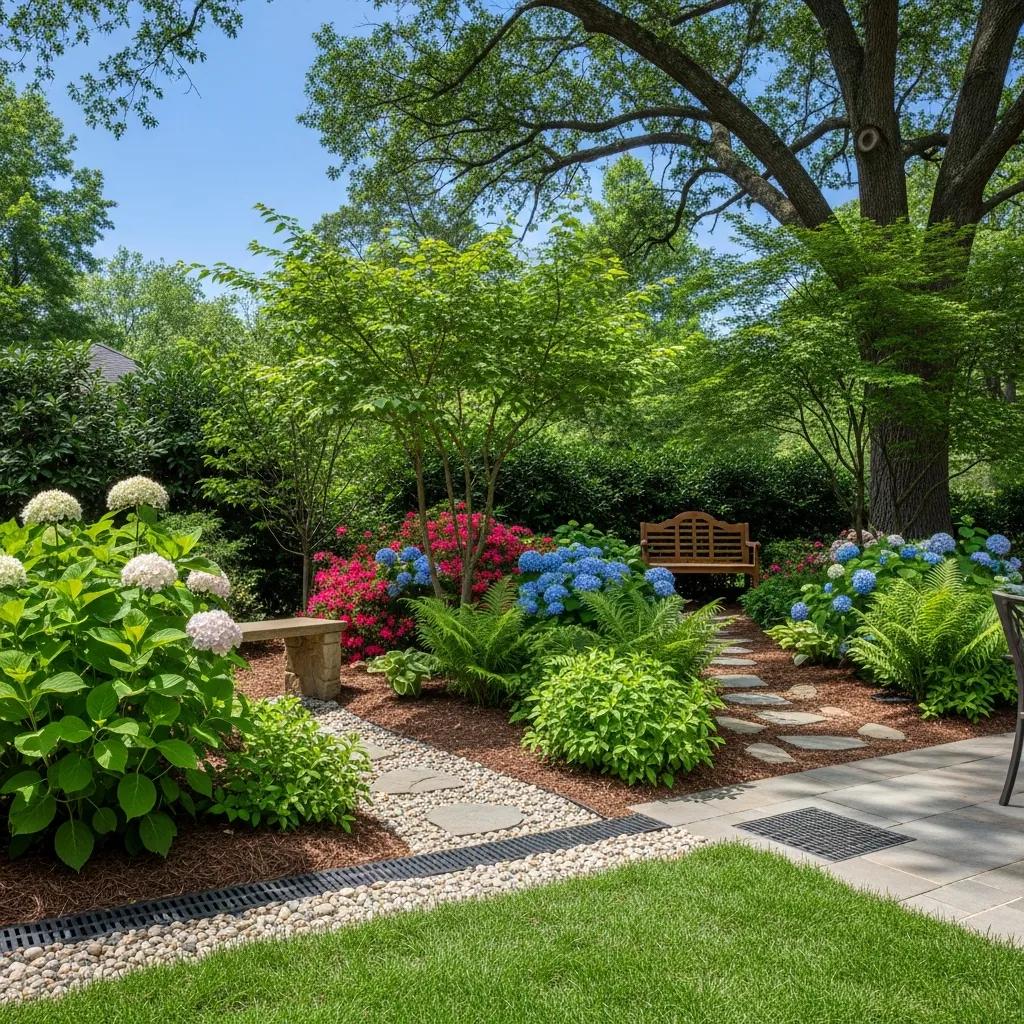
In Atlanta’s climate—marked by intense thunderstorms and clay-heavy soil—effective landscape drainage isn’t just about puddle prevention; it’s essential for protecting your foundation, preventing soil erosion, and maintaining a healthy, usable yard. Without proper solutions, standing water can damage hardscapes, drown plants, and create breeding grounds for mosquitoes.
In this guide, we’ll explore the most effective drainage solutions for Atlanta properties, from French drains and dry creek beds to strategic grading and permeable paving, helping you design a system that directs water away from your home and preserves your landscape investment.
Effective Landscape Drainage Solutions for Soggy, Problem Yards
How Does Atlanta’s Soil And Climate Affect Yard Drainage Issues?
If your yard in Atlanta stays soggy long after a storm, it is not just bad luck. The region’s soil and weather combine in a way that makes drainage harder than many homeowners expect. Understanding these local conditions helps you choose drainage solutions that actually work instead of treating the symptoms for one season and seeing the same problems return.
Atlanta’s soil is often clay-heavy, and clay behaves differently than sandy or loamy soil. It has small particles that pack tightly together, which limits how quickly water can pass through. When rain hits the ground faster than the soil can absorb it, water runs across the surface and collects in low spots. That is why pooling water is so common in lawns, along fence lines, and near patios, even when the yard looks relatively flat.
Why Clay Soil Makes Water Stick Around
Clay’s low permeability means water moves slowly downward. During dry stretches, clay can also harden and develop a crust-like surface that sheds water instead of soaking it in. Then, when heavy rain arrives, the water has nowhere to go quickly. It either sits on top of the soil or runs downhill, often creating erosion channels that deepen over time.
Clay also expands when it absorbs moisture and shrinks when it dries out. That constant cycle can change the grade slightly, create new low areas, and stress landscaping. In some yards, the soil near the home becomes compacted from foot traffic or construction, making absorption even worse. When you are evaluating drainage solutions, it is important to account for both slow infiltration and surface runoff, because Atlanta yards often deal with both at the same time.
How Atlanta Weather Contributes To Drainage Problems
Atlanta’s humid subtropical climate brings frequent rain events and occasional intense downpours. A short storm can dump enough water to overwhelm the yard, especially if the ground is already saturated from earlier rain. High humidity also slows evaporation, which is why puddles can linger and the lawn can stay soft for days.
This is where drainage solutions need to be practical and site-specific. A yard that floods in one corner may not need a full redesign, but it may need regrading to remove a low spot, better downspout routing, or a defined path for surface water to move away. In other cases, repeated saturation points to a deeper issue, such as compacted soil, poor slope direction, or runoff coming from a neighboring property.
Common Signs Homeowners Notice
The first signs are usually water pooling in low areas, muddy patches that never fully dry, and stressed plants that show yellowing or root rot. Over time, you may also see bare spots where grass cannot survive, mulch washing out of beds, or sediment collecting at the bottom of slopes. If water is collecting near the foundation, you might notice damp soil against the home, musty odors in crawl spaces, or staining on basement walls.
Because the soil and climate create predictable challenges, the best drainage solutions in Atlanta typically focus on guiding water away and reducing saturation rather than relying on absorption alone. Once you understand how local conditions shape water movement, it becomes much easier to choose fixes that hold up through the next storm season.
What Signs Indicate Poor Drainage And Yard Flooding?
Poor drainage usually shows up long before you see major flooding. The clues are often small at first, then become more obvious as storms repeat and the yard never fully dries. If you are looking into drainage solutions, learning to recognize early warning signs can help you address the issue before it causes long-term lawn damage, erosion, or moisture problems near the home.
Pooling Water That Lingers After Rain
The most common sign is pooling water in low spots, especially if it remains for hours or returns after every storm. Some puddling right after a heavy rain can be normal, but standing water that lingers suggests the yard is not draining or absorbing water efficiently. You may see it near downspouts, along patio edges, in the middle of the lawn, or at the bottom of a slope where water naturally collects. Over time, these areas can become muddy, compacted, and harder to repair because the soil structure breaks down.
Another red flag is a lawn that stays soft and spongy days after rain. When the ground feels saturated long after the weather clears, it usually means water has limited routes to escape. In Atlanta’s clay-heavy soil, this can happen quickly, which is why drainage solutions often focus on redirecting water, not just waiting for it to soak in.
Erosion And Soil Movement
Erosion is another clear indicator that water is moving through your yard too quickly and concentrating in the wrong places. You might notice channels forming across the lawn, mulch washing out of garden beds, or soil collecting at the bottom of a slope. Exposed roots, leaning plants, and thinning grass can all be connected to runoff that repeatedly strips away topsoil.
Pay attention to areas around walkways, retaining walls, and fence lines. Water that funnels along these edges can slowly undermine the soil and create uneven surfaces. If you are seeing consistent erosion, it is often a sign that drainage solutions should include both water redirection and soil stabilization to prevent the same washout from happening again.
Mold, Mildew, And Persistent Moisture
Excess moisture often shows up as mildew, algae, or fungal growth in shaded or damp areas. You may see green staining on concrete, slippery patches on walkways, or mildew on fences and retaining walls. In planted areas, too much moisture can lead to root rot, yellowing leaves, and plants that struggle despite regular care. Mushrooms in the lawn can also be a sign that the soil is staying wet for extended periods.
Moisture near the home deserves extra attention. Damp soil that hugs the foundation, musty odors in a crawl space, or water stains on basement walls can indicate water is pooling where it should not. In those cases, drainage solutions often start with correcting downspout discharge and grading so water moves away from the structure.
Why Early Recognition Matters
Drainage problems rarely fix themselves. Pooling, erosion, and moisture-related growth tend to worsen as the yard’s grade changes and soil compacts. Identifying the signs early helps you choose drainage solutions that match the problem, whether that means improving surface flow, addressing runoff concentration, or creating better paths for water to exit the property.
Which Landscape Drainage Systems Are Most Effective For Atlanta Yards?
Atlanta yards often need drainage systems that do two things well: move water away from problem areas and keep it from saturating clay-heavy soil for days. Because the ground can drain slowly, the most effective drainage solutions are usually the ones that control where water goes during and immediately after a storm. The right option depends on whether you are dealing with surface pooling, runoff from a slope, or water collecting near the foundation.
What Are The Benefits Of French Drains, Surface Drains, And Dry Wells?
French drains are one of the most common drainage solutions for yards with recurring wet spots or water that pushes toward the home. A French drain is typically a gravel-filled trench with a perforated pipe that collects water below the surface and carries it to a safer discharge point. In Atlanta, they are often used along the base of slopes, behind retaining walls, or near areas that stay soggy after rain. The main benefit is that they intercept subsurface water and relieve pressure in saturated soil, which helps reduce pooling and soft ground over time. They can also help with erosion by reducing the volume of water that travels across the surface.
Surface drains are designed to capture water where it collects on top of the ground. These systems usually involve a drain inlet set at a low point, connected to piping that carries water away. They work well in places where water gathers quickly, such as between a patio and the lawn, at the bottom of a driveway, or in a low section of the yard that turns into a puddle after storms. Surface drains can be a strong choice when the problem is immediate ponding, because they remove water before it has time to spread and damage turf or landscaping. For heavy rain events, they are often one of the fastest-acting drainage solutions.
Dry wells collect runoff and allow it to disperse into the surrounding soil underground. They can be effective when the soil can absorb water at a reasonable rate. In parts of Atlanta where clay dominates, dry wells can be less reliable if the ground stays saturated or does not infiltrate well. That does not mean they never work, but they often perform best when paired with other drainage solutions, such as improved grading or systems that reduce the total amount of water entering the dry well at once. In practice, dry wells are often used for downspout discharge when there is no good outlet and the site conditions support infiltration.
How Does Proper Installation Impact Drainage System Performance?
Installation quality is what separates a good drainage system from one that creates new problems. Slope is critical. If a pipe does not have enough pitch, water will sit in the line and clogging becomes more likely. If the slope is too steep or the discharge point is poorly chosen, water can exit with force and cause erosion elsewhere.
Depth and placement matter as well. French drains need to sit at the right level to intercept the water you are trying to manage, and they rely on proper gravel backfill to keep water flowing instead of trapping it. Surface drains must be placed at true low points, not just where it looks convenient, or water will continue pooling beside them. Discharge locations should also be planned carefully so water moves away from the home and does not flood a neighboring property or return to the same problem area.
For Atlanta yards, the most effective drainage solutions are usually the ones built around how water actually moves across the property. A thoughtful plan and correct installation often matter as much as the system you choose.
How Does Grading and Soil Management Improve Water Runoff in Atlanta Landscapes?
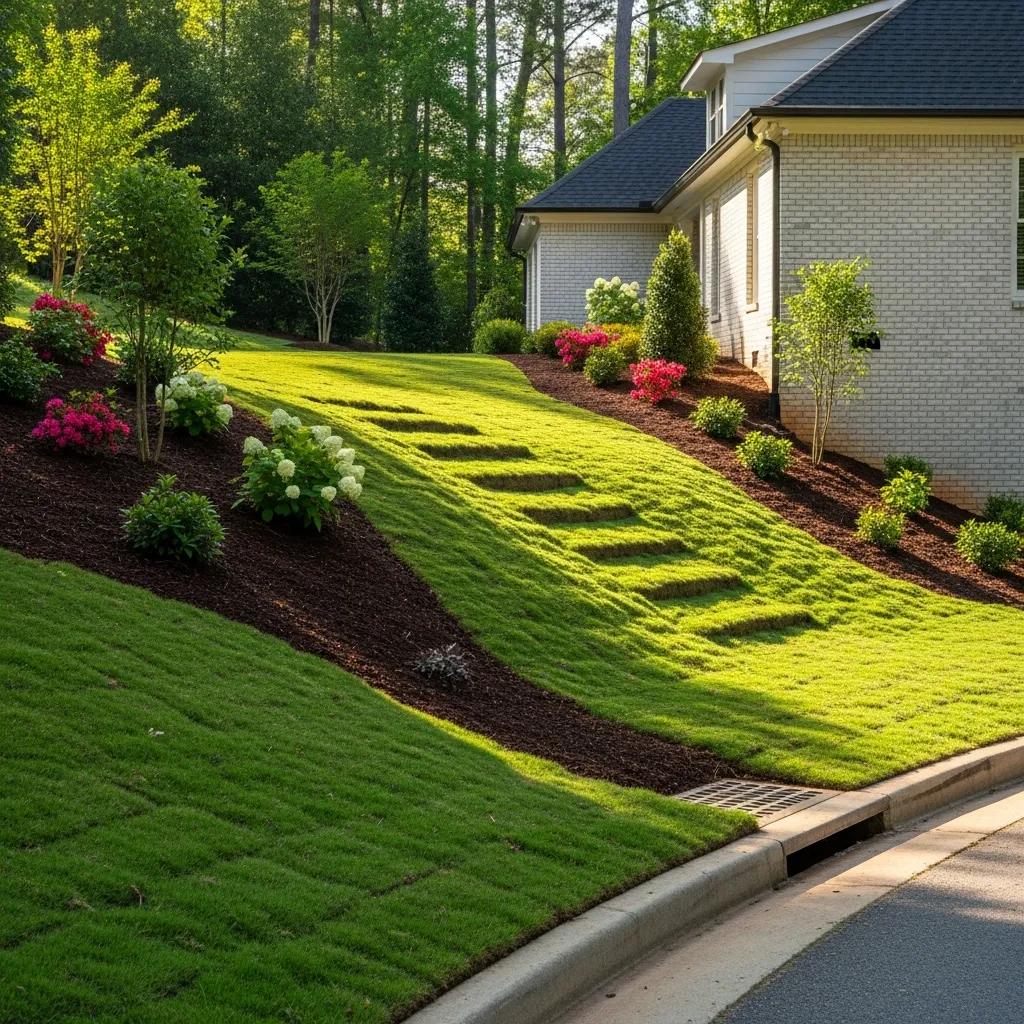
When homeowners start looking for drainage solutions, they often focus on drains, pipes, and catch basins. Those can help, but many Atlanta drainage problems begin with the way the yard is shaped and how the soil handles water. Grading and soil management work together to control runoff, reduce pooling, and protect landscaping and structures from repeated saturation. In clay-heavy areas, these steps are often the foundation of long-term drainage solutions because they change how water moves across the property in the first place.
Grading is about directing water. Soil management is about absorption and stability. When both are handled correctly, water is less likely to collect in low spots, carve erosion channels, or sit against the foundation after storms.
Why Is Correct Grading Essential For Preventing Yard Flooding?
Correct grading shapes the land so water naturally flows away from buildings and toward areas where it can drain safely. Even small changes in slope can make a big difference. If the ground dips toward the home, water will follow that path, collect near the foundation, and create the kind of persistent moisture that leads to muddy beds, lawn decline, and potential structural concerns.
Proper grading also helps prevent standing water in the yard. Many Atlanta lawns have subtle low areas created by soil settling, foot traffic, or past construction. Those dips become collection points during heavy rain. By regrading to eliminate low spots and create a consistent flow path, homeowners reduce the chance of puddling and the ongoing damage that comes with it.
Grading can also protect landscaping. When runoff is forced through a narrow route, it moves faster and strips away soil and mulch. Smoother grading spreads water more evenly, which reduces erosion and helps plants stay anchored. For many properties, the most effective drainage solutions begin with correcting slope problems before installing any additional systems.
What Soil Types Require Special Consideration For Drainage Solutions?
Atlanta’s clay soil is the most common challenge. Clay holds water and drains slowly, which means the yard may stay wet long after rain ends. Clay can also harden when dry and shed water during the next storm, leading to more surface runoff and pooling. This cycle is one reason homeowners often feel like their yard never “balances out.”
Soil amendments can help, but they need to be realistic and targeted. Adding organic matter can improve soil structure over time, helping water move through the soil more consistently and supporting healthier root growth. In compacted areas, loosening the soil and incorporating organic material can reduce puddling and improve turf resilience. However, mixing sand into clay is not always a simple fix. In some cases, the wrong ratio can create a dense, concrete-like texture. The safer approach is usually improving soil with organic matter and focusing on grading and runoff control as the primary strategy.
Understanding your yard’s soil conditions helps you choose drainage solutions that match reality. A yard with heavy clay may need a plan that emphasizes surface flow, downspout routing, and defined drainage paths. A yard with mixed soil or better infiltration may benefit more from soil-based improvements and infiltration features. In either case, grading and soil management are practical tools that reduce water problems at the source, making other drainage solutions more effective and longer lasting.
Optimizing Yard Drainage for Attractive, Functional Atlanta Landscapes
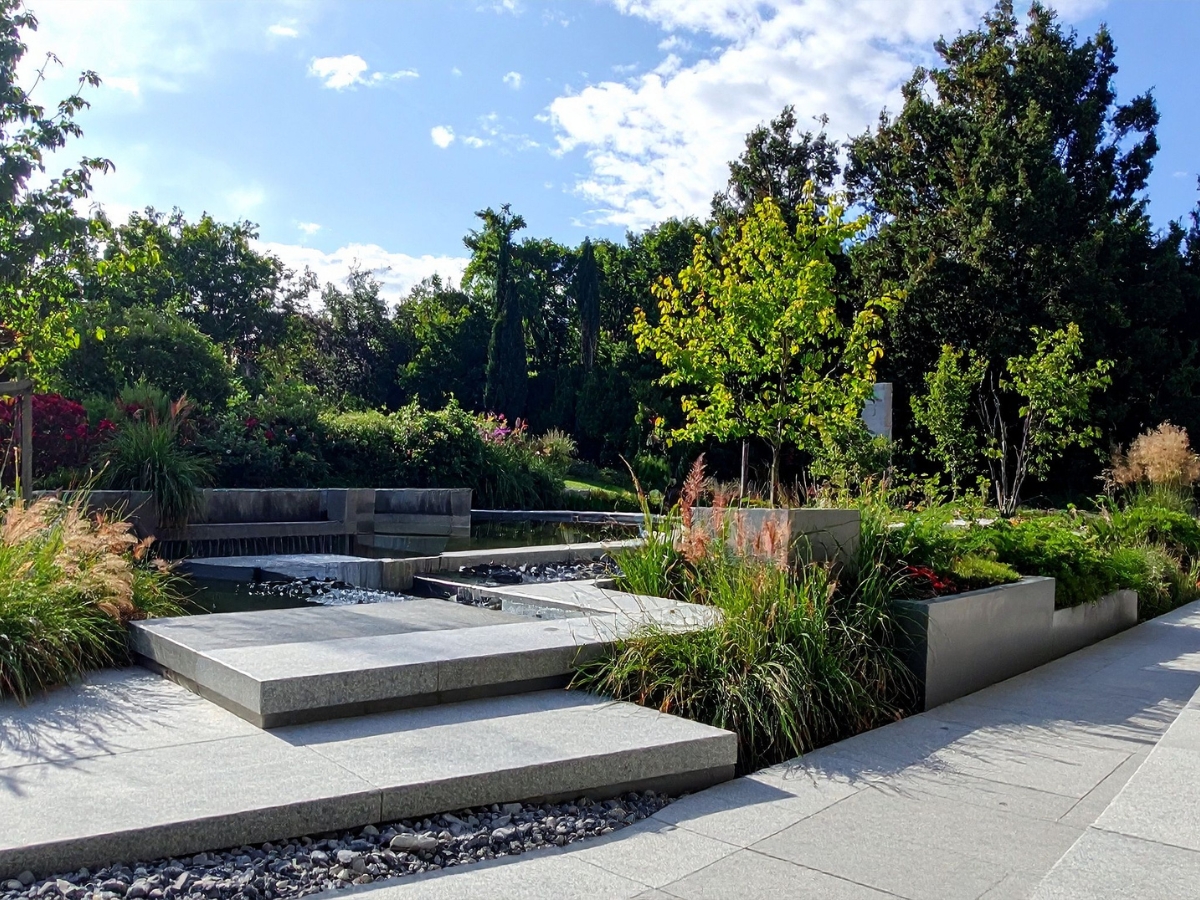
Most homeowners think of drainage solutions as pipes, drains, and grading. Those are often the core fixes, but day-to-day maintenance and smart landscape choices can make a noticeable difference in how water behaves after a storm. In Atlanta yards, where clay soil slows absorption and heavy rain can arrive quickly, small improvements in water management can reduce pooling, limit erosion, and keep drainage systems working as intended.
Water features and routine yard clean-up are not replacements for proper drainage design, but they can support it. When they are planned carefully, they help control where water collects and prevent blockages that turn a manageable runoff issue into a flooded lawn.
Can Water Features Assist With Effective Water Runoff Management?
Water features can play a role in runoff management when they are designed to handle overflow and safely direct water away from structures. A pond, rain garden, or basin-style feature can act as a collection point, slowing down runoff and allowing water to evaporate or soak into the ground more gradually. This is especially useful on sloped properties where water rushes downhill and strips away soil.
The key is design. If a feature is built in the wrong spot or without an outlet plan, it can become a permanent low area that stays saturated and creates standing water. That can lead to mosquito problems, muddy edges, and plant stress. For Atlanta yards, water features that support drainage solutions often work best when they are paired with proper grading, overflow routing, and plant selections that tolerate wet conditions. A feature should also be placed away from the foundation so it does not concentrate water where it can cause moisture issues.
When done well, water features can add visual value while also serving a practical purpose. They can reduce the force of runoff, help protect planting beds, and improve overall yard flow by giving water a defined place to go.
What Maintenance Practices Support Long-Term Drainage Efficiency?
Maintenance is one of the easiest ways to protect your drainage solutions, because most failures happen when water paths get blocked. Leaves, pine straw, mulch, and small branches can clog surface drains, cover weep holes, and slow down downspout discharge. Keeping these areas clear helps water move away quickly during storms instead of backing up into the yard.
It also helps to inspect drainage components regularly. Check drain grates for buildup, confirm downspouts are still directing water away from the home, and look for signs of slow draining, such as puddles forming near an inlet. If you have a French drain or buried system, watch for soft, soggy strips of lawn that suggest a blockage or a crushed pipe.
Grading should be monitored too, because soil settles. Over time, a yard can develop new low spots that change water flow and reduce the effectiveness of existing drainage solutions. After major storms, look for erosion channels, washed-out mulch, or sediment deposits that indicate water is carving a new path. Addressing those issues early, often by reestablishing the grade and stabilizing soil, can prevent bigger problems later.
A well-managed yard works with your drainage plan instead of fighting it. Clean runoff paths, maintained drains, and thoughtful water feature design all support stronger, longer-lasting drainage solutions, especially in Atlanta landscapes where water can quickly overwhelm compacted or clay-heavy soil.
Conclusion
Effective landscape drainage is not just about solving water problems—it’s about protecting your Atlanta property’s foundation, preserving your landscape, and creating a more usable outdoor space. From French drains and dry creek beds to strategic grading, the right solution prevents erosion, mold, and costly structural damage.
At Glover Landscapes, we specialize in designing and installing custom drainage systems that are both functional and seamlessly integrated into your yard’s landscaping. Ready to solve your water woes for good? Call (404) 510-6437 or visit our website for a free estimate on your drainage project. Let’s build a dry, beautiful, and worry-free landscape.